Monday, March 22, 2010

Phobos Imaged by HiRise

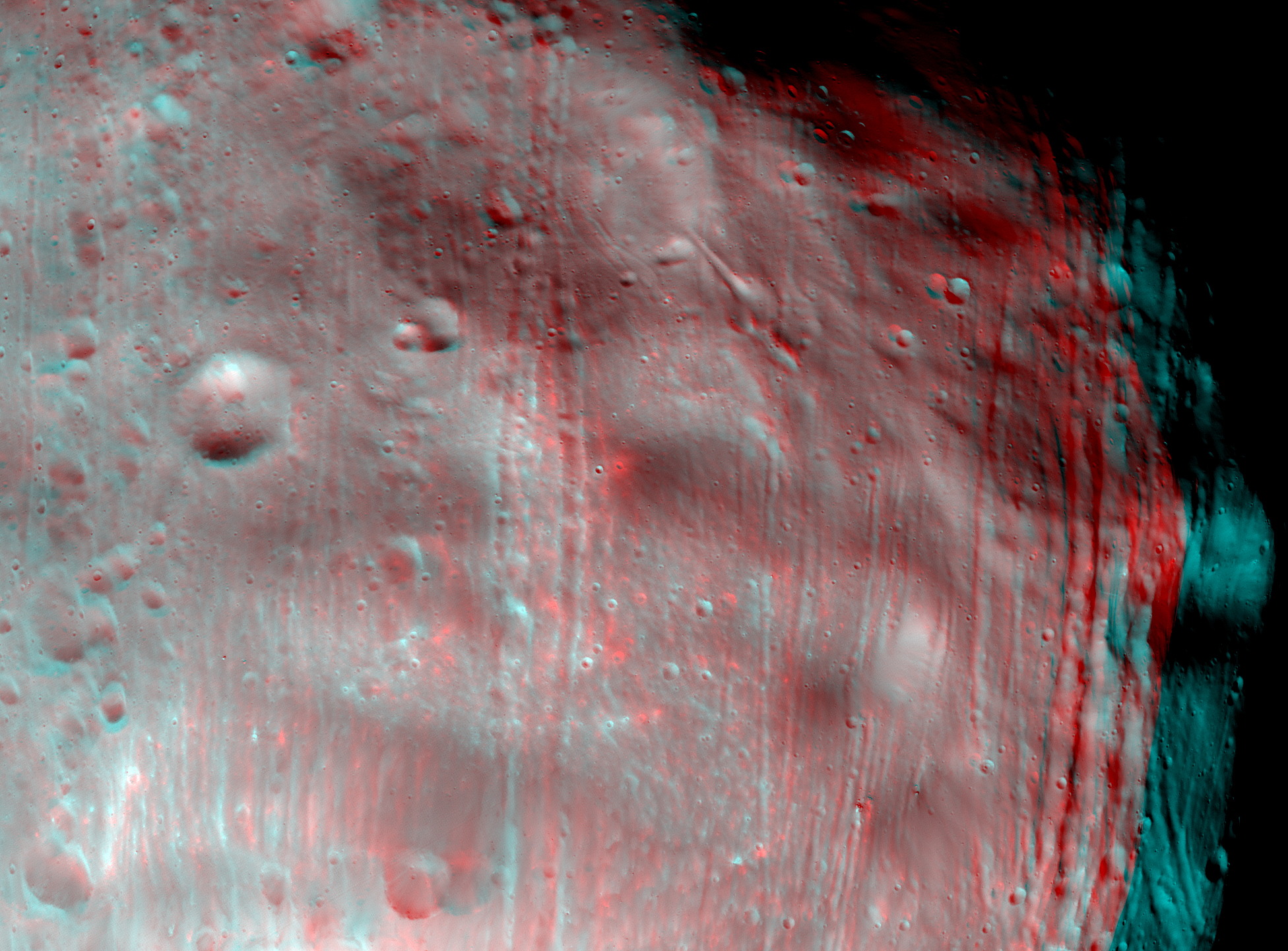
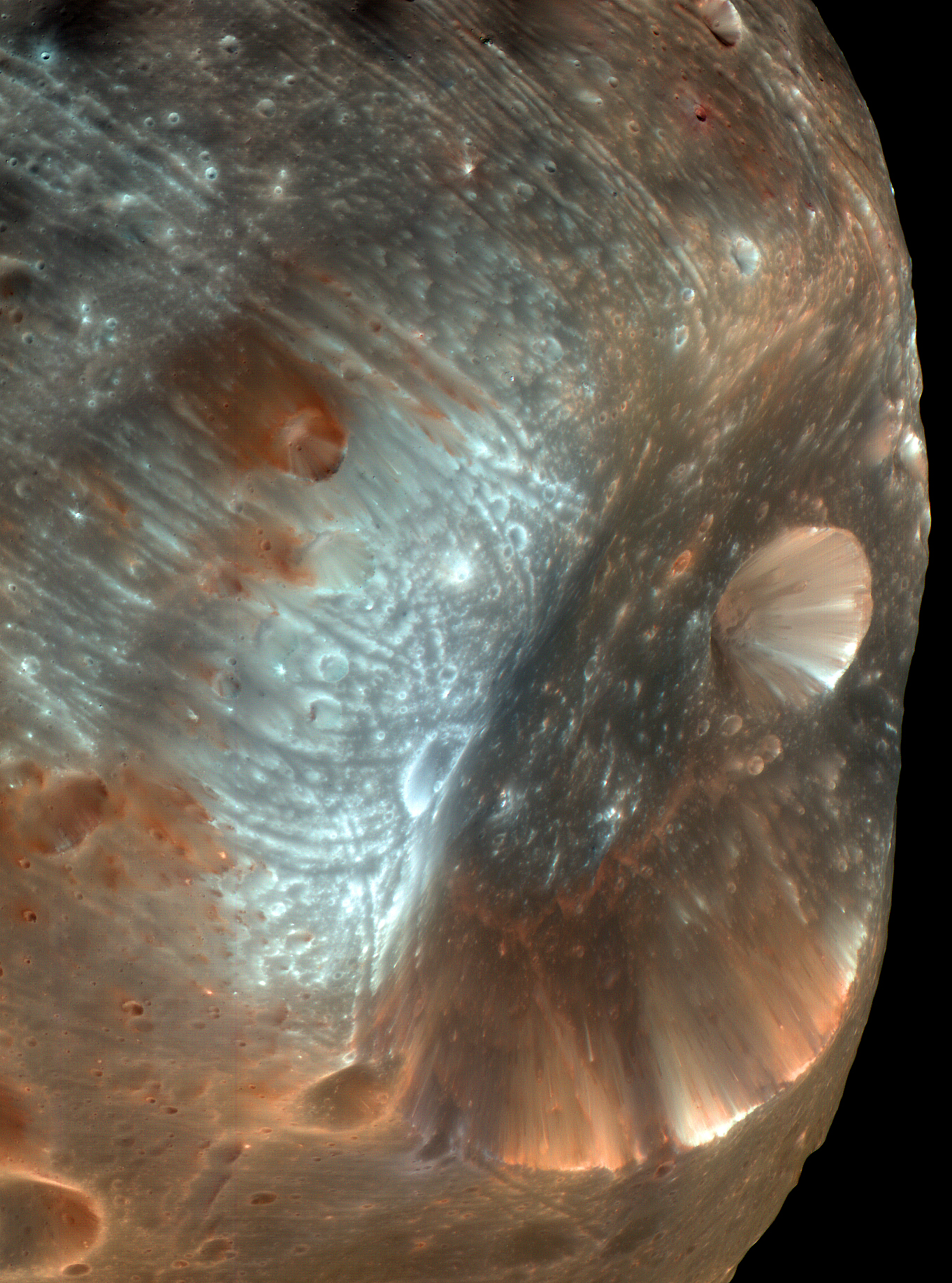
HiRISE acquired two dramatic views of the Martian moon, Phobos, on 23 March 2008. Observation PSP_007769_9010, acquired at a distance of 6,800 kilometers from Phobos, provides surface detail at 6.8 m/pixel scale and a object diameter of about 3,200 pixels. The second observation, PSP_007769_9015 providing a closer look at 5,800 km, views the surface at slightly more detail (5.8 m/pixel with an object diameter of about 4,000 pixels).

The two images were taken within 10 minutes of each other and show roughly the same features, but from a different angle so that they can be combined to yield a stereo view. (Watch a short clip of both observations: 204KB, QuickTime.)

The illuminated part of Phobos visible in the images is about 21 km across. Images from previous spacecraft have been of smaller pixel scale (for example, Mars Global Surveyor got data at 4 m/pixel, because this spacecraft came closer to Phobos), but the HiRISE images have greater signal-to-noise, making the new data some of the best ever for Phobos.

The most prominent feature in the images is the large impact crater Stickney, in the lower right. With a diameter of 9 km, it is the largest feature on Phobos. A series of grooves and crater chains is obvious on the other parts of the moon. Although many appear radial to Stickney in the images, previous studies show that the grooves radiate from a different point on Phobos. Hypotheses for their formation vary. Some scientists believe the grooves and crater chains are related to the formation of Stickney, whereas others think they may have formed from ejecta from impacts on Mars that later collided with Phobos. The lineated textures on the walls of Stickney and other large craters are landslides formed from materials falling into the crater interiors in the weak Phobos gravity (less than 1/1000th the gravity on Earth)

Found Here: http://hirise.lpl.arizona.edu/phobos.php


Here (below) are the "global" coordinates and orbital vector for this ESA Phobos image -- as prepared by Enterprise Associate, Greg Ahrens ....

An extraordinary, geometric, clearly artificial, fractured 3-D surface ... lying just beneath the veneer of "battered, ancient asteroid stuff" that Phobos presents from most other viewing angles -- all now stunningly revealed (below) ... in this high-resolution Mars Express Phobos "face-on" image!

So ... what are these obvious (see below) "grooves of Phobos?"

This fascinating mystery ... evident in the Viking images (above) as "a series of obvious, long, narrow and mysteriously-straight striations ..." -- running parallel across almost the entire visible width of this ~15-mile-wide moon -- was eventually interpreted by NASA as merely "crater-chains of secondary meteor impacts ... caused by Phobos intersecting [running into] such meteor streams ... blasted-out across Phobos' orbit ... as fragments from primary asteroid or comet impacts down on Mars' surface ...."

Now, from this latest Mars Express ultra-high-resolution imaging ( below) -- the REAL cause of these mysterious "grooves on Phobos" is readily, geometrically apparent--

Phobos -- as a clearly "artificial moon"--

"Is literally ... Coming Apart at the Seams!"

Because of the increasing, shearing gravitational forces -- caused by its slow "death spiral" into Mars--

Because of the inevitable--

"Tides ... of Mars."

So yes, what you are staring at (probably, in shock at this point ...) is, in fact ... nothing less than what we've been saying all along ... since trying to educate the first Bush Administration on this data, in 1989 (see below):

That Phobos is, in fact--

An "ancient ... ex terrestrial ... very battered ... 15-mile-long"--

Spaceship.

Exactly like ... "Yonada."

Which now (according to our European sources -- backed up by the actual Mars Express data itself, which you will see more of - below) ESA is about to officially ... publicly announce!

Possibly -- even before President Obama's up-coming ... suddenly-called ... STILL super-secret "Space Summit"--

Which is scheduled to take place, within a few days, at the Kennedy Space Center -- personally hosted by the President of the United States of America -- in the middle of an on-going shuttle mission--

STS-131.

Which, turns out to be ... the 33rd Space Shuttle Mission ... to the Space Station ("ISS").

Can you say "the Fix is in" ... for "something?"

Found Here: http://gazbom.blogspot.com/2010/04/old-space-station-destroyed-in-battle.html


Wednesday, March 17, 2010

Bush Monkey Portrait - Chris Savido 2004

Chris Savido (born Wilkinsburg, Pennsylvania) is an American artist whose acrylic portrait of George W. Bush composed of monkeys created controversy when the managers of Chelsea Market closed down the "ANIMAL'S PARADISE" art exhibition[1] there because of it. It was later auctioned on eBay. There was debate over whether the closing of the show constituted censorship. Supporters of the managers claimed that Chelsea Market was private, and thus management had a right to exclude the painting, while supporters of Savido "[looked] into the degree to which the Chelsea Market walkways are legally definable as 'public space,' and, as such, fully protected by the First Amendment."[1] Anonymous donors later paid for a digital billboard over the Holland Tunnel to show a detail of the painting.[citation needed]

Found Here: http://en.wikipedia.org/wiki/Chris_Savido
New York Art Shuttered After Bush Monkey Portrait
by Larry Fine

NEW YORK - A portrait of President Bush using monkeys to form his image led to the closure of a New York art exhibition over the weekend and anguished protests on Monday over freedom of expression.


Twenty-three-year-old painter Christopher Savido poses with his painting 'Bush Monkeys,' a portrait of President Bush, at the Animal gallery on New York City's Lower East Side, December 13, 2004. The portrait of Bush using monkeys to form his image led to the closure of a New York art exhibition over the weekend and anguished protests on Monday over freedom of expression. (Mike Segar/Reuters)
"Bush Monkeys," a small acrylic on canvas by Chris Savido, created the stir at the Chelsea Market public space, leading the market's managers to close down the 60-piece show that was scheduled to stay up for the next month.

The show featured art from the upcoming issue of Animal Magazine, a quarterly publication featuring emerging artists.

"We had tons of people, like more than 2,000 people show up for the opening on Thursday night," said show organizer Bucky Turco. "Then this manager saw the piece and the guy just kind of flipped out. 'The show is over. Get this work down or I'm gonna arrest you,' he said. It's been kind of wild."

Turco took the show down on Saturday and moved the art work to his small downtown Animal Gallery. Calls to the management of Chelsea Market for comment were not returned.

From afar, the painting offers a likeness of Bush, but when you get closer you see the image is made up of chimpanzees or monkeys swimming in a marsh.

Savido, 23, said he was surprised by the strong reaction to his painting, listed in the catalog at $3,500.

"It seems like people got a kick out of it," Savido said. "When they really see it, they almost do a double-take. I like to get a reaction from people."

The Pittsburgh, Pennsylvania-bred artist said he was happy for all the attention paid to his work but said the decision to shutter the exhibit was "a blatant act of censorship."

Savido plans to auction the painting and donate proceeds to an organization dedicated to freedom of expression.

"This is much deeper than art. This is fundamental American rights, freedom of speech," Savido said. "To see that something like this can happen, especially in a place like New York City is mind boggling and scary."

Found Here: http://www.commondreams.org/headlines04/1214-03.htm

Tuesday, March 9, 2010

The Voynich manuscript

The overall impression given by the surviving leaves of the manuscript suggests that it was meant to serve as a pharmacopoeia or to address topics in medieval or early modern medicine. However, the puzzling details of illustrations have fueled many theories about the book's origins, the contents of its text, and the purpose for which it was intended. Here are only a few of them:

    Herbal - The first section of the book is almost certainly an herbal, but attempts to identify the plants, either with actual specimens or with the stylized drawings of contemporary herbals, have largely failed. Only a couple of plants (including a wild pansy and the maidenhair fern) can be identified with some certainty. Those "herbal" pictures that match "pharmacological" sketches appear to be "clean copies" of these, except that missing parts were completed with improbable-looking details. In fact, many of the plants seem to be composite: the roots of one species have been fastened to the leaves of another, with flowers from a third.

    Sunflowers - Brumbaugh believed that one illustration depicted a New World sunflower, which would help date the manuscript and open up intriguing possibilities for its origin. However, the resemblance is slight, especially when compared to the original wild species; and, since the scale of the drawing is not known, the plant could be many other members of the same family - which includes the common daisy, chamomile, and many other species from all over the world.

    Alchemy - The basins and tubes in the "biological" section may seem to indicate a connection to alchemy, which would also be relevant if the book contained instructions on the preparation of medical compounds. However, alchemical books of the period share a common pictorial language, where processes and materials are represented by specific images (eagle, toad, man in tomb, couple in bed, etc.) or standard textual symbols (circle with cross, etc.); and none of these could be convincingly identified in the Voynich manuscript.

    Astrological herbal - Astrological considerations frequently played a prominent role in herb gathering, blood-letting and other medical procedures common during the likeliest dates of the manuscript (see, for instance, Nicholas Culpeper's books). However, apart from the obvious Zodiac symbols, and one diagram possibly showing the classical planets, no one has been able to interpret the illustrations within known astrological traditions (European or otherwise).

    Microscopes and telescopes - A circular drawing in the "astronomical" section depicts an irregularly shaped object with four curved arms, which some have interpreted as a picture of a galaxy that could only be obtained with a telescope. Other drawings were interpreted as cells seen through a microscope. This would suggest an early modern, rather than a medieval, date for the manuscript's origin. However, the resemblance is rather questionable: on close inspection, the central part of the "galaxy" looks rather like a pool of water.

    Found Here: http://www.crystalinks.com/voynich.html


The Voynich manuscript is a mysterious book thought to have been written in the 15th or 16th century and comprising about 240 vellum pages of handwritten text,[1] of which the majority have illustrations.[2] The text of the manuscript has never been deciphered, and the author, script, and language remain unknown.

Since its recorded existence, the Voynich manuscript has been the object of intense study by many professional and amateur cryptographers, including some top American and Britishcodebreakers of World War II fame, all of whom failed to decrypt any portion of the text. This string of failures has turned the Voynich manuscript into a famous subject of historical cryptology, but it has also given weight to the theory that the book is simply an elaborate hoax—a meaningless sequence of arbitrary symbols.

The book is named after the Polish-American book dealer Wilfrid M. Voynich, who acquired it in 1912. Currently the Voynich manuscript is stored in the Beinecke Rare Book and Manuscript Library of Yale University as item "MS 408". The first facsimile edition was published in 2005.[3]

The peculiar internal structure of Voynich manuscript "words" has led William F. Friedman and John Tiltman to arrive independently at the conjecture that the text could be a constructed language in the plain—specifically, a philosophical or a priori language. In languages of this class, the vocabulary is organized according to a category system, so that the general meaning of a word can be deduced from its sequence of letters. For example, in the modern constructed language Ro, bofo- is the category of colors, and any word beginning with those letters would name a color: so red is bofoc, and yellow is bofof. (This is an extreme version of the Library of Congress Classification used by many libraries—in which, say, P stands for language and literature, PA for Greek and Latin, PC for Romance languages, etc.)

This concept is quite old, as attested by John Wilkins's Philosophical Language (1668), but still postdates the generally accepted origin of the Voynich manuscript by two centuries. In most known examples, categories are subdivided by adding suffixes; as a consequence, a text in a particular subject would have many words with similar prefixes—for example, all plant names would begin with the similar letters, and likewise for all diseases, etc. This feature could then explain the repetitious nature of the Voynich text. However, no one has been able yet to assign a plausible meaning to any prefix or suffix in the Voynich manuscript.

In his book Solution of the Voynich Manuscript: A liturgical Manual for the Endura Rite of the Cathari Heresy, the Cult of Isis (1987), Leo Levitov declared the manuscript a plaintext[25] This he defined as "a literary language which would be understandable to people who did not understand Latin and to whom this language could be read." His proposed decryption has three Voynich letters making a syllable, to produce a series of syllables that form a mixture of Middle Dutch with many borrowed Old French and Old High German words. transcription of a "polyglot oral tongue".

According to Levitov, the rite of Endura was none other than the assisted suicide ritual for people already believed to be near death, famously associated with the Cathar faith (although the reality of this ritual is also in question). He explains that the chimerical plants are not meant to represent any species of flora, but are secret symbols of the faith. The women in the basins with elaborate plumbing represent the suicide ritual itself, which he believed involved venesection: the cutting of a vein to allow the blood to drain into a warm bath. The constellations with no celestial analogue are representative of the stars in Isis' mantle.

This theory is questioned on several grounds. First, the Cathar faith is widely understood to have been a Christian gnosticism, and not in any way associated with Isis. Second, this theory places the book's origins in the twelfth or thirteenth century, which is several centuries earlier than most experts believe based on internal evidence. Third, the Endura ritual involved fasting, not venesection. Levitov offered no evidence beyond his translation for this theory.

Found Here: http://en.wikipedia.org/wiki/Voynich_manuscript


Monday, February 22, 2010

Q3-85 - CARET Program - Isaac

The Technology

A lot of the technology we worked on was what you would expect, namely antigravity. Most of the researchers on the staff with backgrounds in propulsion and rocketry were military men, but the technology we were dealing with was so out of this world that it didn’t really matter all that much what your background was because none of it applied. All we could hope to do was use the vocabulary of our respective fields as a way to model the extremely bizarre new concepts we were very slowly beginning to understand as best we could. A rocket engineer doesn’t usually rub elbows much with a computer scientist, but inside PACL, we were all equally mystified and were ready to entertain any and all ideas.

The physicists made the most headway initially because out of all of our skills, theirs overlapped the most with the concepts behind this technology (although that isn’t saying much!) Once they got the ball rolling though, we began to find that many of the concepts found in computer science were applicable as well, albeit in very vague ways. While I didn’t do a lot of work with the antigrav hardware myself, I was occasionally involved in the assessment of how that technology was meant to interface with its user.

The antigrav was amazing, of course, as were the advances we were making with materials engineering and so on. But what interested me most then, and still amazes me most to this day, was something completely unrelated. In fact, it was this technology that immediately jumped out at me when I saw the Chad and Rajman photos, and even moreso in the Big Basin photos.


The “Language”


I put the word Language in quotes because calling what I am about to describe a “language” is a misnomer, although it is an easy mistake to make.

Their hardware wasn’t operated in quite the same way as ours. In our technology, even today, we have a combination of hardware and software running almost everything on the planet. Software is more abstract than hardware, but ultimately it needs hardware to run it. In other words, there’s no way to write a computer program on a piece of paper, set that piece of paper on a table or something, and expect it to actually do something. The most powerful code in the world still doesn’t actually do anything until a piece of hardware interprets it and translates its commands into actions.

But their technology is different. It really did operate like the magical piece of paper sitting on a table, in a manner of speaking. They had something akin to a language, that could quite literally execute itself, at least in the presence of a very specific type of field. The language, a term I am still using very loosely, is a system of symbols (which does admittedly very much resemble a written language) along with geometric forms and patterns that fit together to form diagrams that are themselves functional. Once they are drawn, so to speak, on a suitable surface made of a suitable material and in the presence of a certain type of field, they immediately begin performing the desired tasks. It really did seem like magic to us, even after we began to understand the principles behind it.

I worked with these symbols more than anything during my time at PACL, and recognized them the moment I saw them in the photos. They appear in a very simple form on Chad’s craft, but appear in the more complex diagram form on the underside of the Big Basin craft as well. Both are unmistakable, even at the small size of the Big Basin photos. An example of a diagram in the style of the Big Basin craft is included with this in a series of scanned pages from the [mistitled] "Linguistic Analysis Primer". We needed a copy of that diagram to be utterly precise, and it took about a month for a team of six to copy that diagram into our drafting program!

Explaining everything I learned about this technology would fill up several volumes, but I will do my best to explain at least some of the concepts as long as I am taking the time to write all this down.

First of all, you wouldn't open up their hardware to find a CPU here, and a data bus there, and some kind of memory over there. Their hardware appeared to be perfectly solid and consistent in terms of material from one side to the other. Like a rock or a hunk of metal. But upon [much] closer inspection, we began to learn that it was actually one big holographic computational substrate - each "computational element" (essentially individual particles) can function independently, but are designed to function together in tremendously large clusters. I say its holographic because you can divide it up into the smallest chunks you want and still find a scaled-down but complete representation of the whole system. They produce a nonlinear computational output when grouped. So 4 elements working together is actually more than 4 times more powerful than 1. Most of the internal "matter" in their crafts (usually everything but the outermost housing) is actually this substrate and can contribute to computation at any time and in any state. The shape of these "chunks" of substrate also had a profound effect on its functionality, and often served as a "shortcut" to achieve a goal that might otherwise be more complex.

So back to the language. The language is actually a "functional blueprint". The forms of the shapes, symbols and arrangements thereof is itself functional. What makes it all especially difficult to grasp is that every element of each "diagram" is dependant on and related to every other element, which means no single detail can be created, removed or modified independently. Humans like written language because each element of the language can be understood on its own, and from this, complex expressions can be built. However, their "language" is entirely context-sensitive, which means that a given symbol could mean as little as a 1-bit flag in one context, or, quite literally, contain the entire human genome or a galaxy star map in another. The ability for a single, small symbol to contain, not just represent, tremendous amounts of data is another counter-intuitive aspect of this concept. We quickly realized that even working in groups of 10 or more on the simplest of diagrams, we found it virtually impossible to get anything done. As each new feature was added, the complexity of the diagram exponentially grew to unmanageable proportions. For this reason we began to develop computer-based systems to manage these details and achieved some success, although again we found that a threshold was quickly reached beyond which even the supercomputers of the day were unable to keep up. Word was that the extra-terrestrials could design these diagrams as quickly and easily as a human programmer could write a Fortran program. It's humbling to think that even a network of supercomputers wasn't able to duplicate what they could do in their own heads. Our entire system of language is based on the idea of assigning meaning to symbols. Their technology, however, somehow merges the symbol and the meaning, so a subjective audience is not needed. You can put whatever meaning you want on the symbols, but their behavior and functionality will not change, any more than a transistor will function differently if you give it another name.

Here's an example of how complex the process is. Imagine I ask you to incrementally add random words to a list such that no two words use any of the same letters, and you must perform this exercise entirely in your head, so you can't rely on a computer or even a pen and paper. If the first in the list was, say, "fox", the second item excludes all words with the letters F, O and X. If the next word you choose is "tree", then the third word in the list can't have the letters F, O, X, T, R, or E in it. As you can imagine, coming up with even a third word might start to get just a bit tricky, especially since you can't easily visualize the excluded letters by writing down the words. By the time you get to the fourth, fifth and sixth words, the problem has spiraled out of control. Now imagine trying to add the billionth word to the list (imagine also that we're working with an infinite alphabet so you don't run out of letters) and you can imagine how difficult it is for even a computer to keep up. Needless to say, writing this kind of thing "by hand" is orders of magnitude beyond the capabilities of the brain.

My background lent itself well to this kind of work though. I'd spent years writing code and designing both analog and digital circuits, a process that at least visually resembled these diagrams in some way. I also had a personal affinity for combinatorics, which served me well as I helped with the design of software running on supercomputers that could juggle the often trillions of rules necessary to create a valid diagram of any reasonable complexity. This overlapped quite a bit with compiler theory as well, a subject I always found fascinating, and in particular compiler optimization, a field that wasn't half of what it is today back then. A running joke among the linguistics team was that Big-O notation couldn't adequately describe the scale of the task, so we'd substitute other words for "big". By the time I left I remember the consensus was "Astronomical-O" finally did it justice.

Like I said, I could go on for hours about this subject, and would love to write at least an introductory book on the subject if it wasn't still completely classified, but that's not the point of this letter so I'll try to get back on track.

The last thing I'd like to discuss is how I got copies of this material, what else I have in my possession, and what I plan to do with it in the future.

Found Here: http://isaaccaret.fortunecity.com/


Tuesday, February 16, 2010

Judaculla Rock - Tsul'kalu'

The meaning of the Judaculla petroglyphs remain a mystery to us. In the late 1800's ethnologist James Mooney documented the Cherokee legend of Tsul'kalu', a slant eyed giant. Tsul'kalu' was considered a great hunter who lived in nearby mountains. As legend describes, the giant leaped down off his mountain to a creek below where he scratched the rock with his 7 fingered hands. Other versions say he scraped it with his toes. Over time the name Tsul'kalu' evolved to Judaculla.

Outcropping soapstone boulders behind Judaculla Rock show evidence of prehistoric quarrying scars where stone bowls were carved from the soft stone. A limited archaeological excavation in 1993 revealed quarrying tools as well. In the Southeastern U.S., soapstone bowls were being manufactured between the Late Archaic Period (3000 -1000 BC) to the early Woodland Period (Sassaman et al), (1000-200 BC), and so by association the glyphs may date to this period.

Found Here: http://www.cs.unca.edu/nfsnc/rock_art/judaculla.html


Wednesday, January 27, 2010

Aurora Jellyfish Parachute

Jan. 26, 2010 -- This was the view looking over the small town of Andenes, Norway, on Jan. 20. Snaking across the sky from horizon to horizon was a dynamic green aurora, signaling to the inhabitants of Earth that the sun was spraying us with an intense stream of energetic particles.

The photographer, Per-Arne Mikalsen, captured the resulting aurora using a Canon EOS 450D camera (with a Sigma 10-20mm 1:4-5.6 DC HSM lens), but it wasn't until after he took the photo that he realized that he'd captured something unexpected in his lens.

After communicating with Norwegian aurora expert Truls Lynne Hansen of the Tromsø Geophysical Observatory, compelling evidence that the green structure hidden in the top right of the photograph could be a reflection (or 'flare') from a satellite flying hundreds of miles above the intense aurora.

"...the color of the 'phenomenon' is the same as the color in the aurora, the auroral green line from atomic oxygen," Hansen told Discovery News, "so the 'phenomenon' is either a genuine auroral feature or a reflection of auroral light somewhere in space."


Found Here: http://news.discovery.com/space/norway-aurora-satellite-flare.html


Tuesday, January 26, 2010

The Holocaust | Pentagram | Burnt Offering | Ritual Mass Human Sacrifice

The word "holocaust" originally derived from the Greek word holokauston, meaning "a completely (holos) burnt (kaustos) sacrificial offering", or "a burnt sacrifice offered to a god". In Greek and Roman pagan rites, gods of the earth and underworld received dark animals, which were offered by night and burnt in full. The word "holocaust" was later adopted in Greek translations of the Torah to refer to the olah[3], standard communal and individual sacrificial burnt offerings that Jews were required[4] to make in the times of the Beit HaMikdash (Temple in Jerusalem).

Found Here: http://en.wikipedia.org/wiki/Names_of_the_Holocaust


Many who will read or hear excerpts of the previous article about the Vatican-Jesuit Holo
caust will remain unconvinced, if not horrified by the claims which its contains.

The claim that a three hundred mile (plus) wide Pentagram of supreme evil can be formed by the precise true geographic location of the worst Nazi Human Sacrifice Camps of WWII will strike many as the “imagination” of conspiracy writers – the same fanciful notion as those who would see religious symbols in simple pieces of toast, or clouds.

Yet the Pentagram is able to be drawn and at its precise center of power is an actual Temple dedicated to Cybele- otherwise known as Inaana, Ishtar and Sibyl --the most ancient goddess whose most sacred site is Vatican Hill. So it is not something that can be discounted entirely.

Logic is a critical tool in the search for truth – what is mere fable and sometimes wild slander – and what makes common sense, sounds reasonable and probable. But what is even more important that a logical perspective is a respectful one.

When anyone mentions World War II and the slaughter of innocents by Roman Catholic Dictators and their allies, we are discussing an event of unprecedented evil. Therefore, uptmost care must be given to respecting their memory and surviving families. Any claim needs to be provable - unquestionably factual and not
reckless, unfounded theories.

To answer any outstanding doubt concerning the complete involvement of the Roman Catholic Church through Pope Pius XII and Jesuit Superior General Wladimir Ledochowski S.J., let us examine some additional evidence concerning the Pentagram, the satanic religious nature of sacrificing over eighteen million people.

Found Here: http://continuingcounterreformation.blogspot.com/2009_01_01_archive.html


(Secret) Knowledge is Power

The evidence of who won the Jesuit Civil War is all around us. Universities have blossomed. Science discovery has accelerated and knowledge is universally accepted as power—the power of imagination and the era of the United States. The New World Order won the Civil War and remain firmly in control.


In terms of key satanic knowledge that relates to their power, the secret knowledge of the Great Vatican-Jesuit Pentagram of Evil is very important knowledge, forgotten by many. So too, is the clear and unmistakable image “makeover” of evil from satan and “the devil” to Lucifer- or the spirit of Francis Borja personified as evil.


It is why Borja ordered every church to ever be built by the Jesuits in following years to be constructed under strict codes of similar design—every Jesuit church was purpose built to be a readymade temple to Lucifer -- to the spirit of Francis Borja, the real founder of the Jesuits.


Similarly, human sacrifice to the satanic gods became more sophisticated, starting with the atomic bombs on Japan. No longer did the New World Order Jesuits need massive and expensive human sacrifice camps to “burn” millions of victims, one tiny bomb could do it in seconds.


One of the greatest criminal acts in history remains the executive order by President Truman to drop the atomic bombs on Hiroshima and disgraced Jesuit city Nagasaki in 1945 after receiving not one, but several official notices of surrender from the Japanese. Thus began the “modern” age of sacrifice to the satanic gods of the Vatican and Jesuits.
Found Here: http://one-evil.org/acts_holocaust/acts_vatican_holocaust_part_4.htm

Saturday, January 16, 2010

Hale Crater Mars Civilization Geometric Shapes Digital Compression

Images #1, 3, 5, 7 and 9-10, were taken by MarsExpress satellite, show odd, highly organized geometrical structures, that follow topology and respect laws of perspectivity. Pictures #2, 4, 6, 8 and 11-12 are corresponding crops, converted to BW, contrast enhanced and slightly sharpened by a very accurate S-spline algorithm. The whole image enhancment process was optimized to not introduce additional artefacts. Extensive image analysis showed, that no image processing algorithm is known, that may have created the said structures systematically or by chance. Cosine transform/inverse cosine tranfsorm (DCT/IDCT) artefacts - so called JPEG pixelation - must be disregarded, since uncompressed TIF imagary is available and detail resolution (raw data unit DCT blocksize) is mapped down to about 2x2pixel. Map colorization programs follow given 2D/3D landscape atrributes and are not known to create highly organized, distinctive, geometric patterns on their own. Possible patchwork artefacts (mosaics) can be excluded, since the images in question were taken in a single stripe shot by MarsExpress' NADIR- and high resolution stereo camera (HRSC). However a possible interaction between NADIR- and HRSC data can not be excluded; but no image from another location could be found, that shows similar or comparable patterns. Hence, the origin of the depicted structures must be considered as unknown. A detailed mission description can be found here. ESA/DLR/FU-B hi res image library can be browsed here.

Found Here: http://www.adenet.ch/halecrater.htm


Saturday, January 2, 2010

Spiral Symbolism - Prehistoric Geometry

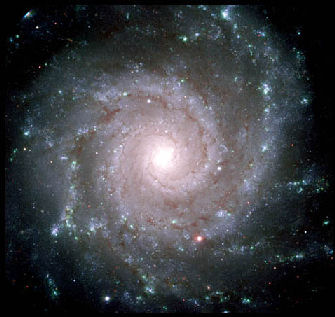
Why is the spiral such a compelling shape? Why does it have a positive meaning for every culture that ascribes a meaning to it? Could it be because we, on this tiny planet whirling around one of 100 billion suns, can call a spiral galaxy home?

The spiral has found its way into the art of almost all cultures, from ancient primitive rock carvings on all continents to today's corporate logos. They show up in celtic art, native American petroglyphs, Nazca earthworks, Arabic architecture, Japanese rock gardens, Hindu spiritual texts, Australian aboriginal paintings and African art. Surprisingly, no religious or political group has claimed exclusive rights to the spiral. It remains non-sectarian, or maybe pan-sectarian. The spiral belongs to everyone and excludes no one.

In various mythologies the spiral is a globally positive symbol. Here are some of the meanings that have been attributed to the spiral.

Carl Jung, the famous psychiatrist, said that the spiral is an archetypal symbol that represents cosmic force.

In ancient Britain, the spiral seems to have been associated with the feminine as the doorway to life.

It has been associated with the cycles of time, the seasons, the cycle of birth, growth, death, and then rebirth. The cycles of time and nature are the cycles of life.

Some consider the spiral a symbol of the spiritual journey. It is also considered to represent the evolutionary process of learning and growing. It seems that life doesn't proceed in a straight line. The path of life more closely resemble a spiral. We seem to pass the same point over and over again but from a different perspective each time. To walk and then stand in the center of a spiral or labyrinth has been a psycho-spiritual exercise for centering the consciousness.

The spiral stands for coming into being.

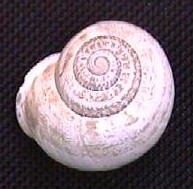
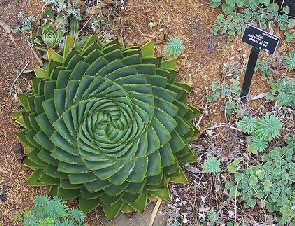
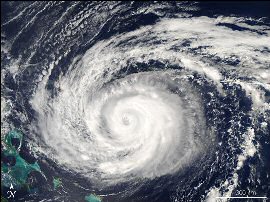
The spiral shows up often in nature - in hurricanes and tornados, in the pattern of seeds in a sunflower, in the growing tips of ferns, in the pattern that leaves grow on a stem, in the shape of a nautilus shell, and, as a helix, the shape of the DNA molecule.

The spiral is the journey of life


Found Here: http://www.zenzibar.com/cosmicspiral/cosmicspiral.htm

The Spiral
-
(Prehistoric Geometry)

Spirals are a common natural form, appearing at all levels of nature. They are the natural product of Phi (Ф), which is also called the 'Golden Section' or the 'Golden Mean'.

Service and Bradbery (2), write that the spiral refers to:

'...the belly and navel (Neumann 1955). It is also seen as representing a Navel of the earth - the Omphalos...E.A.S Butterworth in 'The Tree at the Navel of the Earth' calls it the Omphalus sign...now seen as very ancient and very widespread (Roscher 1913), This fits well into the idea of megalith as places of interchange between the cosmic forces of the sky and earth'. (2)

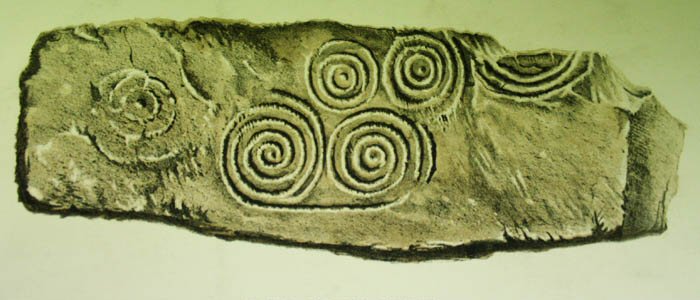
Examples of European Megalithic Spiral-Art.

Prof. Alexander Thom suggested that some of the European megalithic spirals had been carved with mathematic precision, using a common unit of measurement associated to the Megalithic Yard.

Irish Spirals.

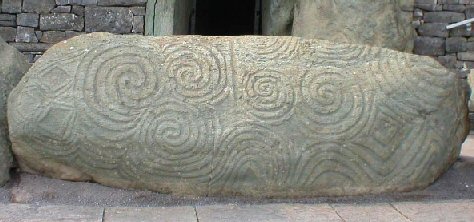
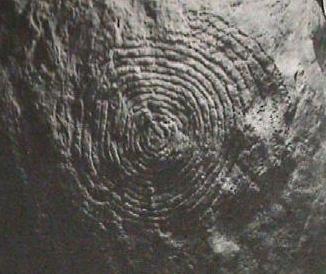
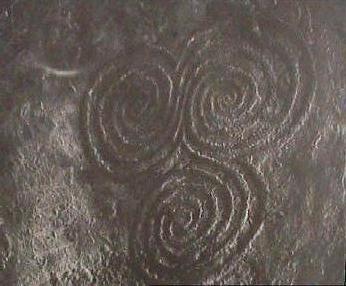
The mound at Newgrange has been dated at about 3,200 BC (Burl). The passageway has been shown to possess both a solar orientation, and a secondary astronomic feature in its design called a 'light-box', of which three others have so far been identified (One at Carrowkeel, Ireland, one at least on the Orkney Islands, Scotland, and another other at Bryn Celli Ddu in Wales). All of the 'light-boxes' have one thing in common, which is that they were orientated to solar events.

Front Kerbstone, Newgrange - Note spirals left of the central line go in one direction, whilst those on the right go in the other direction.

The spirals above are all from Newgrange, in the Boyne valley, Ireland.

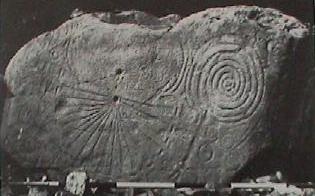
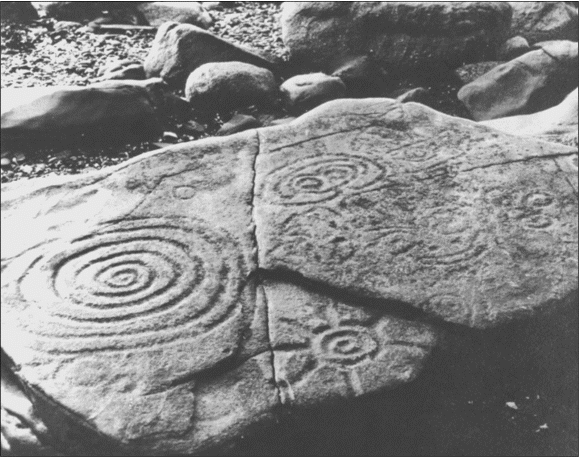
knowth, ireland.

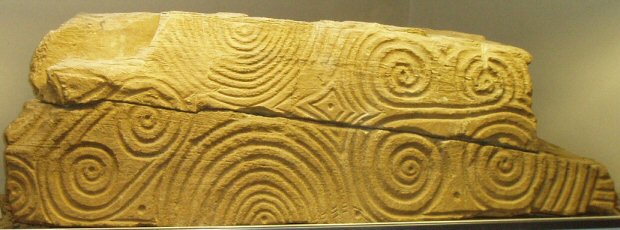
Kerb-stone from Knowth, Ireland, also a part of the Boyne Valley 'complex'.

Spirals are a common feature of Irish megalithic art. They can be seen at numerous other Irish megaliths, although there exact meaning (If there is such a thing), is far from being understood.

(More about Prehistoric Ireland)

Portuguese Spirals.

Being one of the earliest regions of megalithic activity in Europe, it is interesting to find one of the largest spirals here also.

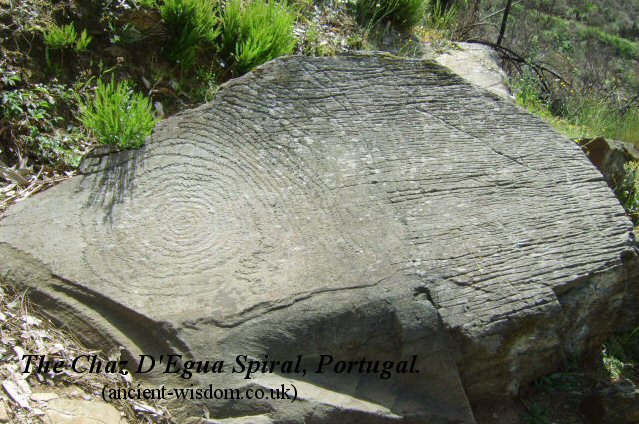
Chaz D'egua spiral, Portugal. (ancient-wisdom.co.uk)

This recently discovered spiral-art (right), was found in the region of Poidáo in Portugal.

The spiral is around 0.5m in diameter, possibly making it the largest known carved spiral in Europe. Unlike most spirals, this one sits alone on the side of a hill, with no obvious orientation or apparent purpose. Several other spirals along with various rock-art, stone phallus, cart-ruts and even signs of Christianisation make it probable that this inhospitable valley system was an importance prehistoric site for a long time.

(More about Piodao region of Portugal)

In addition, the stone circle at Almendres which is considered to be one of the oldest oldest stone circles in Europe ('4th to 5th millennium B.C' - Site plaque - 2007.), also has/had a spiral on one of it stones.

Maltese Spirals.

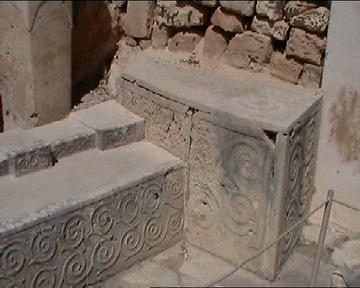
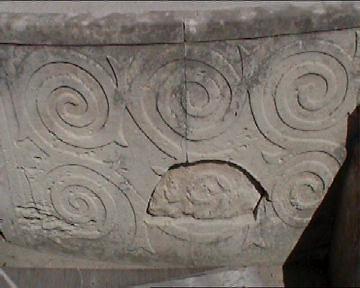
There are numerous spiral motifs in Malta, but they are decorative, 'floral' spirals, unlike the single examples found at many UK stone circles. Service and Bradbury (1), say that 'spiral patterns are associated with the great goddess'. A statement that makes sense in Malta., but nowhere else.

These 'floral-spirals' (above), come from the Tarxien in Malta. They show a strong similarity to Celtic and Norse motifs, but are dated far earlier at 3,000 -3,500 BC.

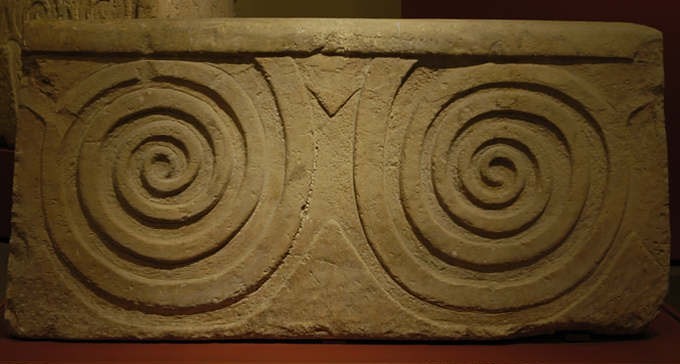
This spiral-art is from Bugibba 'temple' on Malta is indistinguishable from others found in the Orkneys, Scotland as the following pictures illustrate...

Scottish Spirals.

The 'Westray Stone', from Pierowall (left). The Eday Manse stone, Isle of Eday. (right).

(More about the Orkneys)

Other European Spiral-art.

The Flat Rocks of Helluland I (2)- with similar 'Solar-wheels' as those found in Ireland.