Sunday, October 17, 2010

Adolf Hitler attending a rally in Munich

A famous image shows Adolf Hitler attending a rally in Munich, Germany, at the outset of World War I in 1914. Historian Gerd Krumeich told a German newspaper this week that he determined the image was almost certainly a fake.

BERLIN (Oct. 16) -- A new exhibit about Adolf Hitler and the Germans breaks taboos and treads new ground as it explores the relationship between the Fuehrer and his Volk.

The exhibit, which opened this week in Berlin to crowds of curious visitors, is packed with Nazi memorabilia, from swastika-bearing beer mugs to SS uniforms, in a bid to show how pervasive propaganda images of Hitler were throughout German society as the Nazis gained and then held power. By coincidence, it includes one famous image purportedly showing Hitler at at World War I rally that was revealed this week to have almost certainly been doctored.

Called "Hitler and the Germans: Nation and Crime," the exhibit at the German Historical Museum is careful not to open itself to charges that it is fueling a personality cult. It contains no memorabilia of Hitler himself, seeking only to show how his image was used in Nazi society.

"We don't want to focus on Hitler as a personality," Hans-Ulrich Thamer, curator of the exhibit, told reporters at a preview of the exhibit Wednesday. "We want to look at the rise of the regime, how it operated in power and how it fell, and the tremendous destructive potential that National Socialism unleashed."

The exhibit comes at a time when racism appears to be on the rise in Germany. A study published this week by the Friedrich Ebert Foundation, which is financed by the Social Democratic Party, showed that 35.6 percent of those polled believe Germany is being "overrun by foreigners." More than one in 10 Germans polled agreed with the statement that the country needed a "Fuehrer" to rule "with a strong hand," and about a third said foreigners should be sent home when jobs are scarce.

"In 2010, there has been a significant increase in anti-democratic and racist attitudes," the study's authors, Elmar Braehler and Oliver Decker, told reporters. "We are experiencing a dramatic turning point."

That poll comes on the heels of a heated debate over a book by Thilo Sarrazin, a former Social Democrat politician, that criticized German immigration policy and appeared to make racist comments about Muslims living in Germany. As a result of the row, Sarrazin was forced to resign from his post on the board of Germany's influential central bank, the Bundesbank.

Against that backdrop, Stephan Kramer, head of the Central Council of Jews in Germany, considers the Hitler exhibit important.

"I think this exhibit takes place at the right time because the various debates taking place right now, for example about the Sarrazin book, show how the lower middle class can be used and misled by pandering to their fears," Kramer said. "My only concern is that the wrong people will come and visit the exhibit."

The curators went to great lengths to deflect the seductive power of images of Hitler and other artifacts by placing them side by side with documentary presentations of Nazi atrocities and the path of destruction that Hitler wove through Europe. There are plenty of Nazi symbols in the exhibit -- swastikas, parade flags bearing the Nazi call to arms "Deutschland erwache!" (Germany awake!) and an extensive presentation of Nazi propaganda films.

Michael Sohn, AP
Various Nazi paraphernalia including cigars, a wallet and a quartet decorated with a swastika are shown at the exhibit "Hitler and the Germans: Nation and Crime" in Berlin on Wednesday.

Not all those images are what they seem to be.The exhibition contains one iconic photo of Hitler cheering amid a crowd at a Munich war rally at the outset of World War I, which the Nazis touted as evidence of the Fuehrer's patriotic common touch. This week historian Gerd Krumeich told Die Welt newspaper that he had determined that the picture, frequently reproduced during and since the Nazi era, was almost certainly a fake and that Hitler's image had been superimposed on the photo. Other similar plates in the studio of Munich photographer Heinrich Hoffmann looked very different, and the Hitleresque figure appears in no other images of the Aug. 2, 1914, rally.

The curators declined to exhibit objects they feared could draw neo-Nazis or sympathizers. While they exhibited a number of authentic Nazi uniforms, for example, they did not request a uniform held in Moscow that was actually worn by Hitler.

Simone Erpel, one of the curators of the exhibit, says it was important to treat these objects with a certain "critical distance," adding that this is the first museum exhibit to seriously explore why the Germans were so fascinated with Hitler.

Sponsored Links
"We are not making Hitler a hero," she said.

An absorbing subplot in the exhibit is how Germany has dealt with the Fuehrer in the postwar period. Demonstrating the continued fascination -- or morbid curiosity -- with Hitler, one corner of the exhibit displays a wall of photos of Hitler that have emblazoned the cover of Germany's leading weekly magazine, Der Spiegel. Since the 1990s, the curators said, Der Spiegel has put Hitler on the cover at least once a year.

In recent years, Germany has begun more openly debating the Fuehrer and the fascination he exerted over ordinary Germans. In the past Hitler was often presented as pure evil, beyond human. But the 2004 film "Downfall," a portrayal of the last days of the Third Reich, broke the final taboo and presented an image of Hitler as a deranged, feeble and ultimately broken man. It was "Downfall," more than any other recent event, that paved the way for the German Historical Museum to approach this sensitive subject.

The effort seems to have paid off in the minds of foreign tourists visiting Berlin.

"This is a brilliant exhibit of contrasts," said Jetin Habstaat, a tourist from Oslo, Norway. "One can see the propaganda but you can also see the opposition. It shows also the impact of the violence."
Found Here: http://www.aolnews.com/world/article/berlin-adolf-hitler-exhibit-breaks-taboos-and-reveals-a-hoax/19676166?icid=main|main|dl1|sec1_lnk2|178220

Thursday, October 14, 2010

The Fabian Society

Jeanne Kirkpatrick is the Senior Fellow at the American Enterprise Institute. MS. Kirkpatrick was for years on the letterhead the Fabian Socialist League for Industrial Democracy. The Fabian Society is honest among themselves about their dishonesty. Their emblem is a sheep in wolfs clothing.

Found Here: http://www.themuckraker.net/earlwarrenfp.html

The Fabian Society is a British socialist movement, whose purpose is to advance the principles of socialism via gradualist and reformist, rather than revolutionary, means. It is best known for its initial ground-breaking work beginning late in the 19th century and continuing up to World War I. The society laid many of the foundations of the Labour Party and subsequently affected the policies of states emerging from the decolonisation of the British Empire, especially India. They emblem of the society is the proverbial wolf in sheep's clothing.

Today, the society is a vanguard think tank of the New Labour movement. It is one of 15 socialist societies affiliated to the Labour Party. Similar societies exist in Australia (the Australian Fabian Society), Canada (the Douglas-Coldwell Foundation and in the past the League for Social Reconstruction) and New Zealand.

Found Here: http://en.wikipedia.org/wiki/Fabian_Society

1) THE STAINED GLASS WINDOW FROM THE FABIAN SOCIETY - This is the stained-glass window from the Beatrice Webb House in Surrey, England, former headquarters of the Fabian Society. It was designed by George Bernard Shaw and depicts Sidney Webb and Shaw striking the Earth with hammers to "REMOULD IT NEARER TO THE HEART'S DESIRE," a line from Omar Khayyam.

Found Here: http://fun-factsunknowncontest.blogspot.com/2009_01_01_archive.html

The Fabian Society, founded in 1884 in Great Britain to promote Socialism. The Fabian Society takes its name from the Roman General Fabius Maximus, who fought Hannibal's army in small debilitating skirmishes, rather than attempting one decisive battle.

Found Here: http://www.nok-benin.co.uk/religion/occult.htm
What then is the REAL goal of the Obama Health Care Plan? It should be apparent that Obama wants to get a large “comprehensive” plan enacted – one that creates lots of entitlements. That it may prove to be both unworkable and unconstitutional is not only “not a problem” to him and his cronies, THAT IS THE INTENTION. When this new system inevitably becomes overly burdensome THEN they will propose (and maybe then rightly so) that the only way out will be a full blown, income tax funded, National Health Care System (in progressive speak, a "Public Option"). If we could go back and take away the entitlements, then that would be a way out. But we all know how that works, don't we?


This plan is right out of the 120 year old Fabian papers. This tactic is referred to as “crisis creation” and it goes like this; first do anything possible to screw up the capitalist system and then, when there is discord and panic among the citizenry, propose a step toward socialism as the cure. It doesn't matter that socialist intervention was the root of the problem. The public is too stupid to figure that out. Look how well it worked in the current economic crisis. The Democrats, over the heated objection of Republicans, forced Fannie and Freddie to give loans to those who cannot afford them. The end result: The “Bail Out Bill” - the biggest single step toward socialism, that didn't involve an armed revolt, in history. This plan never fails. As Obama's mad dog White House Chief of Staff, Rahm Emanuel recently said, "We never let a good crisis go to waste."

Note that the famous Cloward-Piven strategy for “Controlled Crisis Creation for Crippling Capitalism,” that was all the rage in academic circles back in the 60's, is really just a subset of this overall Fabian concept of “Crisis Creation” strategy that has been around much longer. That strategy has sometimes been restated as, “Building Socialism on the ashes of Capitalism.”

If we watch for these things, if we recognize and understand them when we see them, then we have a fighting chance.

Found Here: http://www.freedomsite.us/Editorials.html


George Bernard Shaw
Fabian Essays in Socialism
London: The Fabian Society, 1889.

Shaw wrote for the Fabian Society from 1884 until 1929. During that time he wrote sixteen tracts and edited at least two dozen others. For this book, Shaw took charge of all aspects of production. This included editing the text, writing the preface, compiling the index, supervising the cover design by Walter Crane and the spine design by May Morris, choosing the paper, selecting the type, and writing the handbill announcement. Two of his essays appear in the volume, "The Basis of Socialism: Economic" and "The Transition to Social Democracy."

Sidney P. Albert -- George Bernard Shaw Collection

Found Here: http://www.brown.edu/Facilities/University_Library/exhibits/shaw/politics.html


The shield above the world globe has a sheep in wolf’s clothing signifying their commitment to deceit. Their name Fabian is from the General who exercised extreme patience and using the technique of gradualism to have their way.

The Kirkpatricks fashioned the candidacy of Hubert Humphrey (CFR) and later Ronald Reagan (United World Federalist) Reagan paid his dues by appointing globalist Socialist Kirkpatrick to be Ambassador to the UN. John Roberts Jr. is as deceitful as Jeanne Kirkpatrick’s organization the League for Industrial Democracy.

American comic strip writer exposed Trilateralist Jeanne Kirkpatrick and her cronies Starr calls them the P.C.A.

Lil Orphan Annie cartoonist Starr didn’t last too long after he exposed the Trilateral Commission. For more on Orphan Annie see TheMuckraker.net The powerful national news papers ended the cartoonist’s career just they ended that of Jerry Voorhis and Westbrook Pegler.

Senator Barry Goldwater in his book With No Apologies wrote the Trilateral Commission … "is intended to be the vehicle for multinational consolidation of the commercial, and banking interests by seizing control of the political government of the United States.

Your Rushs, O ‘Reillys and Savages and Frankins, Colmes, and Goodmans … they haven’t the knowledge or fortitude to expose the members of the CFR, Ripon society and the Satanic oath takers of the Skull & Bones … get yourself a shortwave and listen to those who do. Found Here: http://www.themuckraker.net/earlwarrenfp.html


Wednesday, October 13, 2010

Konrad Wachsmann


Konrad Wachsmann (born May 16, 1901 in Frankfurt an der Oder, Germany; died Nov. 25, 1980 in Los Angeles, California) was a German modernist architect. He is notable for his contribution to the mass production of building components.

Originally apprenticed as a cabinetmaker, Wachsmann studied at the arts-and-crafts schools of Berlin and Dresden and at the Berlin Academy of Arts (under the Expressionist architect Hans Poelzig). During the late 1920s he was chief architect for a manufacturer of timber buildings. He designed a summer house for Albert Einstein, one of his lifelong friends. He received the Prix de Rome from the German Academy in Rome in 1932.

In 1938 he emigrated to Paris and in 1941 to the United States, where he began a collaboration with Walter Gropius and developed the "Packaged House System", a design for a house which could be constructed in less than nine hours. Before the end of the Second World War he also developed a mobile aircraft hanger for the Atlas Aircraft Corporation. He would later design aircraft hangers for the U.S. Air Force in the 1960s.

Wachsmann taught at the Illinois Institute of Technology in Chicago from 1949 to 1964 and at the University of Southern California in Los Angeles from 1964 to 1974.[1]

He is buried in his native Frankfurt an der Oder.

Found Here: http://en.wikipedia.org/wiki/Konrad_Wachsmann

Form finding Techniques
Some architects have based their work in the interest in natural systems, in the relation of experimental models to geometry and in iterative mathematics and the contribution of irregularity to the strength in biological and architectural structures.
His research includes a brad range of studies in nature as a source for architectural an engineering design, and is always dirtied towards applications in construction.
They are particularly interested in the natural processes of self-generation of forms and in the structural behavior of those forms.
In their work, form finding is a design instrument, based on empirical processes that utilise the self-organisation of material systems under the influence of extrinsic forces. The range of possible forms is determined by the choice and definition of the conditions under which the form finding process take place.
One of this architects was Konrad Wachsmann.

Konrad Wachsmann was born in 1901. After an apprenticeship as carpenter he studied at the arts-and-crafts schools of Berlin and Dresden and at the Berlin Academy of Arts. In 1938 he emigrated to Paris and in 1941 to the United States, where he developed several projects and collaborate whith different architects.
The project that best shows form-finding processes is the large span aircraft hangars for the American Air Force, a space grid system that incorporated a relatively complicated universal connector, made from a combination of four standard die forged elements which allowed up to 20 tubular members to be connected at each joint.

Found Here: http://parasitevisions.wordpress.com/2010/09/04/form-finding-techniques-konrad-wachsmann/


Tuesday, October 12, 2010

Ed Paschke

Edward Francis Paschke (June 22, 1939 - November 25, 2004) was a Polish Americanpainter. He was born in Chicago, where he spent most of his life. His childhood interest in animation and cartoons, as well as his father's creativity in wood carving and construction, led him toward a career in art. As a student at the School of the Art Institute of Chicago he was influenced by many artists featured in the Museum's special exhibitions, in particular the work of Gauguin, Picasso and Seurat.

Although Paschke was inclined toward representational imagery, he learned to paint based on the principles of abstraction and expressionism. Paschke received his bachelor of fine arts degree from the School of the Art Institute of Chicago in 1961, and later his Masters Degree in Art in 1970 from the same school. Drafted into the Army on November 4, 1962, he was sent to Fort Polk, Louisiana, where he worked in the Training Aids Department, working on projects including illustrations for publications, signs, targets and manuals to explain weapons and procedures to incoming troops.

Paschke studied at the School of the Art Institute of Chicago during the height of the Imagist movement in the late fifties, while supporting himself as a commercial artist. He avidly collected photographs-related visual media in all its forms, from newspapers, magazines, and posters to film, television, and video, with a preference for imagery that tended toward the risqué and the marginal. Through this he studied the ways in which these media transformed and stylized the experience of reality, which in turn impacted on his consideration of formal and philosophical questions concerning veracity and invention in his own painting. At the same time, he sought living and working situations—from factory hand to psychiatric aide - - that would connect him with Chicago’s diverse ethnic communities as well as feed his fascination for gritty urban life and human abnormality. Thus he developed a distinctive oeuvre that oscillated between personal and aesthetic introspection and confronting social and cultural values. Official Ed Paschke website

In his early paintings Paschke both incorporated and challenged depictions of legendary figures by transforming them into corps exquis, such as Pink Lady (1970) where he set Marilyn Monroe’s famous head atop the suited body of an anonymous male accordion player; or Painted Lady (1971) where he redesigned screen legend Claudette Colbert as a tattooed lady fresh from a freak show. Another direction through which he explored the features and quirks of meaning and logic was in paintings of leather accessories interpreted as anthropomorphized fetish objects, such as Hairy Shoes (1971) and Bag Boots (1972). In the decades separating Pink Lady and Matinee (1987), Paschke shifted his interest from print to electronic media and a dazzling spectrum of televisual waves and flashes began to fill the paintings. Forms and images disintegrated, broken apart in the fabric of electronic disturbance and its surface. In Matinee, the face of Elvis Presley is fragmented into a field of glowing swathes of color with lips and eyes alone suggesting the human presence beneath the electronic overlay. [1]

Paschke made use of an overhead projector to layer images, which he then rendered using the traditional and time-consuming medium of oil painting. He began with an underpainting in black and white, then addressed it with refined systems of colored glazing or impasto to enliven the optical and physical textures of his painting. With this original and painstaking process he created a formal parallel with the black-and-white-to-color progression in the historical development of printing, film, and television images, at the same time moving the subject matter from the particular to the non-specific to allow a wider range of interpretation. In his later work, once again forms became more solidified, moving back towards certain kinds of psychologized presences and the edgy tension that characterized his earlier work. [2]

Unlike most of his Pop predecessors with their unthreatening embrace of popular culture, Paschke gravitated towards the images that exemplified the underside of American values—fame, violence, sex, and money – a preference that he shared with Andy Warhol, who was one of his foremost inspirations. Although long considered to be an artist of his own time and place, his explorations of the archetypes and clichés of media identity prefigured the appropriative gestures of the “Pictures Generation,” and for a new generation of global artists his totemic, eye-popping paintings have come to embody the essence of cosmopolitan art. [3]

Ed Paschke lived and worked in Chicago. His work is included many museum collections including the Art Institute of Chicago, Walker Art Center, Minneapolis, Hirshhorn Museum and Sculpture Garden, Washington D.C., Whitney Museum of American Art, New York, and Centre Pompidou, Paris. Major exhibitions include “Ed Paschke: Selected Works 1967–1981”, Renaissance Society, University of Chicago (1982, traveled to the Contemporary Art Museum, Houston); “Ed Paschke Retrospective”, Centre Pompidou, Paris (1989–1990, traveled to the Dallas Museum, Texas and the Art Institute of Chicago, 1990–1991; “Ed Paschke: Recent Work”, Illinois Institute of Art, Chicago (2003); and “Ed Paschke: Chicago Icon, A Retrospective”, Chicago History Museum (2006). [4]

Paschke died Thanksgiving day, 2004, apparently of heart failure. At that time a New York critic lamented that Paschke's "contribution to the art of his time was somewhat obscured by his distance from New York."[1] Since his death there have been several museum and gallery exhibitions of Paschke's work, most recently including a museum-quality show at Gagosian Gallery on Madison Avenue in New York City, curated by noted pop artist Jeff Koons. [5] As a student, Koons admired Paschke’s work and became his assistant in Chicago in the mid-1970s while attending the School of the Art Institute of Chicago. Paschke would prove to be an important mentor and formative inspiration for the young artist. Paschke's influence in both his subject matter and pioneering use of color continues to influence artists around the world. [6]

Found Here: http://en.wikipedia.org/wiki/Ed_Paschke

PROFESSIONAL EVOLUTION

Ed Paschke was born in 1939 in Chicago. His childhood interest in animation and cartoons led him toward a career in art. As a student at The School of the Art Institute of Chicago he was influenced by many artists featured in the Museum's special exhibitions, in particular the work of Gauguin, Picasso and Seurat. Although Paschke's interests leaned towards representational imagery, he learned to paint based on the principles of abstraction and expressionism. Paschke received his Bachelor of Fine Arts degree from The School of the Art Institute of Chicago in 1961, and his Master of Fine Arts degree from The School of the Art Institute of Chicago in 1970. Between his graduate and undergraduate work Paschke traveled and worked a variety of jobs amassing the experiences that would shape his artistic style. During a brief period in New York, he was exposed to Pop Art philosophy and began to incorporate elements of this style borrowing images directly from the print media and other elements of popular culture. Themes of violence, aggression, and physical incongruity prevail in his work of this period. Returning to Chicago in 1968 he exhibited with other artists whose work, like Paschke's, shared references to non-Western and surrealist art, appropriated images from popular culture and employed brilliant color throughout a busy and carefully worked surface. Known collectively as the Imagists, their work attracted attention both regionally and nationally.

Paschke's work of the 1970's reflects society's subculture as the artist replaced images from the print media with images derived from the electronic media. In Paschke's most recent work, he enlarges scale to a grand proportion and includes images of such well-known figures as George Washington, Elvis Presley, and Mona Lisa. His work reveals a powerful interaction between humanity and technology capable of shaping perception at the most fundamental level.

In addition to his individual pursuits as a fine artist, Paschke was an active member of the academic community for most of his adult life. Following brief stops at a Barat College in Lake Forest Illinois, Meramec Community College in Kirkwood, MO. and the School of the Art Institute, Paschke became a full-time professor of art at Northwestern University in Evanston, Illinois in 1978. He remained there, where he often served as Chairman of the Art Department, for over twenty six years until his death in 2004.

TIMELINE

1957

Paschke enrolls in The School of The Art Institute of Chicago in the Department of Drawing, Painting, and Illustration. He excels in figure drawing (which he practices on the commuter train) but is unprepared to deal with formal concepts of composition; he is particularly mystified by theories of abstraction. At school Paschke points expressionistically, but in private he draws realistically. Frequently he visits the Art Institute galleries where he admires paintings by Edouard Monet that depict figures in a "posterlike" manner against a black background-thereby violating the rules taught in class. Paschke also responds to compositions by Edgar Degas, particularly The Millinery Shop (1879/84) with its "repetition of shapes." Other favorite works include Peter Blume's The Rock (1948) and Jack Levine's The Trial (1953-54), which he finds "amazingly well painted with an economy of means." He is appreciative of J.-A.-D. Ingres's depictions of flesh and fabrics but is emotionally drawn to Rembrandt's self-portrait. The "Picasso: 75th Anniversary Exhibition" is an important experience for Paschke, as is the work of Richard Lindner included in the "62nd American Exhibition of Painting and Sculpture." In conjunction with academic classes, Paschke reads Charles Dickens, Aldous Huxley, H. L. Mencken, Franz Kafka, and Jack Kerouac.

1958

Favorite classes are two in life drawing: lineal with instructor John Fabian, and volumetric with Isabel Steele MacKinnon, a former student of Hans Hofmann. He also takes a class in lettering and magazine illustration. "Seurat Paintings and Drawings" introduces Paschke to the master's Conte-crayon works, which later serve as stylistic models for his own black-and-white drawings, such as the Queen Dido illustration for Playboy (see figs. 8, 9). Paschke exhibits Commutism (1958), a work based on his daily train rides, in the "1958 Chicago Artists Exhibition." He receives commendation for figure drawing from the School of the Art Institute.

1959-61

Paschke is exposed to the work of Ivan Albright, Leon Golub, Hans Hofmann, Jack Levine, and H. C. Westermann in the "63rd American Exhibition" at The Art Institute of Chicago. He also sees work by Bruce Conner, Robert Rauschenberg, and Larry Rivers in the "64th American Exhibition." He receives Faculty Honorable Mention for Advanced Painting and Figure Drawing (1960-61) and Class Honorable Mention for Figure Painting. He graduates from the Art Institute and wins the Anna Louise Raymond Foreign Traveling Fellowship ($1,500), which he uses for a three-month trip to Mexico with SAIC colleagues Karl Wirsum and Bert Phillips. In August 1961 he returns to Chicago with slides, a pet parrot named Flaco, and a "visual written journal which locked the experience into my conscious or subconscious."

1961-62

In September Paschke takes an apprentice position at the Pace Studios, Chicago, where he cleans brushes and fetches coffee for the established commercial artists but receives no assignments of his own; he leaves after six months. He receives three commissions from Playboy (which include Queen Dido, fig. 8) and establishes a continuing relationship with the magazine (twenty-eight of his illustrations are published from 1962 to 1989). In May Paschke seeks employment in New York as a magazine illustrator. During his week there (staying near the Greyhound Station in Times Square), he visits Birdland and museums but is unsuccessful in obtaining a job. Back in Chicago and sensing an impending draft notice, he takes a civil-service examination and works (June-August) as a psychiatric aide at the Dunning Psychiatric Center (Chicago-Read Mental Health Center) to satisfy a long-standing curiosity concerning mental abnormality.

Returning to New York, Paschke rents a room on the Upper West Side and experiments with filmmaking, surreptitiously shooting the neighborhood derelicts. He rewards them with drinks for "mugging" and "acting" in his films. Later he splices this footage with professional move clips; the interspersed visuals, which the artist had seen repeatedly as a child, are for him "a collage of early life."

1962-64

Paschke is drafted into the Army, November 4, 1962, and sent to Fort Polk, Louisiana. As a Specialist Fourth Class, he illustrates training aids to explain weapons and procedures to incoming troops. The images include diagrams on how to load a gun as well as full-scale renderings of guns; in retrospect, they remind him of Pop Art. Paschke's own proficiency with a .45-caliber revolver qualifies him for the job of pursuing AWOL soldiers across the South into Georgia and Texas. Personally, he is surprised by the tough brutality of several fellow draftees whose aggressive demeanor and life experiences significantly contrast with his own. Released from the Army on November 4, 1964, he returns to Chicago.

1965

In January he spends the remainder of his fellowship funds on a trip to Europe, visiting Rome, Florence, London, and Paris. Glad to be back in the United States, "where things were happening," he spends March and April in New York, where he sublets a room on the Lower East Side in an abandoned synagogue. To keep warm, he stuffs old New York Times in the cracked window frames; the most appealing images he cuts out and pasts on cardboard, inking over some parts and painting out others (see fig. 11). The resulting collages-many with duplicate figures-serve as prototypes for paintings. At the Museum of Modern Art's "Recent Painting and Sculpture Acquisitions" exhibition, he is impressed by Andy Warhol's Gold Marilyn (1962). Paschke returns to Chicago in April. He rents space in a condemned building (near North Avenue and Halsted Street) and paints-living on three dollars a day-until the money runs out. He sees exhibitions of works by Max Beckmann and Stuart Davis at The Art Institute of Chicago. He exhibits in "Phalanx 3" at the Illinois Institute of Technology with, among others, Tom Palazzolo, a colleague from the School of the Art Institute, whose work has interested him for its theatrical subject matter and depictions of amusement-park freaks. In October he takes a job at the Wilding Studio working with a team of draftsmen rendering a map to be used in training astronauts for the Apollo moon mission.

1966

Paschke leaves Wilding Studio in June to work for Silvestri, a display company, painting a Piranesi-style scene on the temporary faÁade around the first-floor windows of the Carson, Pirie, Scott and Company department store (fig. 10); he notes how ironic it is to be covering Louis Sullivan's architectural landmark with an imitation of art. Paschke explores the inner city's ethnic neighborhoods and historic shrines, including sites of infamous crimes and favored underworld hangouts. Occasionally he deposits an assortment of jackets on the back seat of his parents' car and, cruising from bar to bar, changes clothes to harmonize with the local clientele. He sees various exhibitions of work by Jack Levine, Rene' Magritte, Robert Rauschenberg, and James Rosenquist and feels "an affinity for their Surrealistic juxtapositional strategy." Paschke attends the first of the "Hairy Who" exhibitions at the Hyde Park Art Center. Seeing his former Art Institute colleagues James Falconer, Art Green, Gladys Nilsson, Jim Nutt, Suellen Rocca, and Karl Wirsum professionally engaged and organized causes him to question his own potential.

1967

Paschke stops work in June to give himself time to paint. Large Round Open (1965) (fig. 12) is exhibited in the "Seventieth Annual Exhibition by Artists of Chicago and Vicinity." Paschke sees works by Claes Oldenburg and Dan Flavin at the newly opened Museum of Contemporary Art, Chicago.

1968

Paschke takes the role of "leading man" in Red Grooms's film Tappy Toes, which is staged in Grooms's room-sized construction, Chicago (1967-68). He joins with Sarah Canright, Edward C. Flood, Robert Guinan, and Richard Wetzel in the "Nonplussed Some" exhibition at the Hyde Park Art Center; Paschke shows nine works, including Amor (1968) and Dos Criados (1968) (cat. nos. 2, 3). Purple Ritual (1967) (cat. no. 1) and Tet Inoffensive (1968) are included in the Museum of Contemporary Art's exhibition "Violence in Recent American Art."

In the spring Paschke meets Nancy Cohn, a former Art Institute student he had dated during his undergraduate years. They are married November 22. The couple takes an apartment at Clark Street and Oakdale Avenue; Paschke attends graduate school at the Art Institute on the GI Bill; a master's degree will enable him to obtain a teaching position that will support his family and still leave him time to paint.

1969

Paschke studies silkscreening with Sonia Sheridan at The School of The Art Institute of Chicago, where he prints Budget Floors (1968-69) (fig. 19). He enters a variety of national juried print and drawing shows as a means of obtaining exposure for his images; practically, he finds that works on paper can be most easily and inexpensively transported. He exhibits in "Nonplussed Some Some More" at the Hyde Park Art Center and in "Don Baum Sez 'Chicago Needs Famous Artists'" at the Museum of Contemporary Art. Paschke is taken on by Deson-Zaks Gallery in Chicago. For "Art by Telephone," an exhibition organized by the Museum of Contemporary Art, Chicago, he follows phoned instructions from British artist Richard Hamilton. Dos Criados (1968) is among three works included in "Human Concern/Personal Torment: The Grotesque in American Art," organized by the Whitney Museum of American Art, New York.

1970

Paschke sees a retrospective exhibition of works by Andy Warhol-the artist whom he deems to be the most significant postwar American painter-at the Museum of Contemporary Art, Chicago. He exhibits Accordion Man (1969) (cat. no. 4) and other works of the Hyde Park Art Center in "Marriage Chicago Style" (see fig. 21). Paschke continues graduate studies at the School of the Art Institute where he is a Ponte del Arte Fellow. He receives his Master of Fine Arts on June 22, 1970 (his thirty-first birthday). In May he has his first one-person show, at the Deson-Zaks Gallery, Chicago, Mid American (1969) (cat. no. 5) is exhibited in the "30th Society for Contemporary Art Exhibition" at The Art Institute of Chicago and is acquired by the museum. The canvas is one Paschke has struggled with over an extended period of time, and which he had considered a failure prior to repainting its left side. One of Paschke's few repainted works, the painting conceals an image of a young boy beneath the now-visible baseball mitts.

Moving to St. Louis in the late summer, Paschke begins in September teaching at Meramec Community College, Kirkwood, Missouri. He shows Marshall McLuhan's documentary film The Medium Is the Message to his painting classes and is as impressed by the film's visual effects-which feature the superimposition of colored gels on live action-as he is by the content.

Found Here: http://www.edpaschke.com/biography/professional_evolution.php


Saturday, October 9, 2010

GEOLOGIC TIME SPIRAL - A Path to the Past

GEOLOGIC TIME SPIRAL (overleaf), showing the sequence, names, and ages of the geologic periods and epochs, and the evolution of plant and animal life on land and in the sea. The primitive animals that evolved in the sea during the vast Archean and Proterozoic Eons left few traces in the rocks because they had not developed hard parts, such as shells, but hard-shell or skeletal parts became abundant during and after the Cambrian Period. This drawing was made when the Geological Survey and most others used the term Precambrian to embrace what is now included in the Archean and Proterozoic Eons. The end of the Archean Eon and beginning of the Proterozoic Eon has been placed at about 2,500 million years ago. Also, because of more recent radiometric dating, the ages of the boundaries between some of the geologic periods and epochs have been changed slightly. Of most concern to this report, the boundary between the Pliocene and Pleistocene Epochs has been changed from 3 million to 2 million years. Drawn by John R. Stacy originally for inclusion in a report by Newman (1976). (click on image for an enlargement in a new window)

The Earth is very old—4.5 billion years or more according to scientific estimates. Most of the evidence for an ancient Earth is contained in the rocks that form the Earth's crust. The rock layers themselves—like pages in a long and complicated history—record the events of the past, and buried within them are the remains of life—the plants and animals that evolved from organic structures that existed 3 billion years ago.

Also contained in rocks once molten are radioactive elements whose isotopes provide Earth with an atomic clock. Within these rocks, "parent" isotopes decay at a predictable rate to form "daughter" isotopes. By determining the relative amounts of parent and daughter isotopes, the age of these rocks can be calculated. Thus, the scientific evidence from rock layers, from fossils, and from the ages of rocks as measured by atomic clocks attests to a very old Earth.

See USGS Fact Sheet 2007-3015 at http://pubs.usgs.gov/fs/2007/3015/ for ages of geologic time periods. Ages in the spiral have been rounded from the age estimates in the Fact Sheet. B.Y., billion years; M.Y., million years. For more information, see the booklet on Geologic Time at http://pubs.usgs.gov/gip/geotime/.

Product Type: Poster
Date created: 2009-05-22
Time created: 18:01:24
Color: Full Color
Page Size: 20 x 24
Finish: Non-Glossy
Orientation: Portrait

Tuesday, October 5, 2010

Aaron Shikler John F Kennedy Posthumous Portrait 1970

Aaron Shikler (born March 18, 1922) is an American artist noted for portraits of American statesmen and celebrities.

Shikler, born in Brooklyn, New York, is noted for his posthumous character study of John F Kennedy, Oil Portrait of John F. Kennedy, which serves as Kennedy's official White House portrait. He also painted the official White House portraits of first ladies Jacqueline Kennedy and Nancy Reagan. He also painted portraits of the Kennedy children.[1]

Shikler studied at the Tyler School of Art, Philadelphia, and at the Hans Hofmann School, New York and is represented in numerous public collections such as The Brooklyn Museum of Art, The Metropolitan Museum of Art, the Hirshhorn Museum and Sculpture Garden, the New Britain Museum of American Art, and the National Academy of Design.

Found Here: http://en.wikipedia.org/wiki/Aaron_Shikler

Murder of John F. Kennedy Jr and End Time Reductionism

1. Murder of John F. Kennedy Jr v Murder of Robert F. Kenn
edy and John F. Kennedy and End Times Reductionism
Nothing like the July 1999 CNN Board to illustrate this point.
Shortly after the "accident" was announced, CNN opened the message board "Kennedy Tragedy". (1)
Three hours later Matt Marriott posted "22 November 1963- 19 July 1999 - the circle is completed", which became visible in the first page of the board.
A milestone of end times reductionism about the satanic ritual murders part of the End of the USA puzzle. (2)

Three days later, 22 July 1999, after posting to the CNN board links to a page with the obvious keys (3) to a murder which was designed to be obvious, unlike the murder of Robert Kennedy in 1968 and John F Kennedy in 1963, Matt Marriott was banned from the CNN boards.
For the global illuminati media, after a moment of Truth shortly before and shortly after the begin of Armageddon, 22 July 1999 is the milestone for the end of placing pieces in the Illuminati End Times puzzle, till the end of Armageddon.

The last page of that board was designed to have as first lines the 26 July 1999 post of a CIA psy-op handle ("Joe Lewelling") "exposing"the fact that the Clintons attended the satanic ritual murder. The pos
t was terminated in the illuminati joke format, with a reference to prosecutor Kenneth Starr, one of the key actors during the previously staged Clinton Impeachment.
26 July 1999, one week after the "plane crash" was announced, the last page of the board is another milestone of end times reductionism, with the Illuminati for the first time openly telling the sheep the essential "detail" of one of the satanic ritual murders part of the End of the USA puzzle. (4)

2. Assassinations of the Kennedies who refused to bow and End Time Reductionism
End Time Reductionism begins with the fact that John F. Kennedy Jr was one of the last americans who refused to bow, shortly before almost all americans accepted to carry the mark of the Beast.

As now the Illuminati stage the "Obama's 100 Days: Behind-the-Scenes Photos" act, a set of 77 photos, which maximally reduced returns only one, the "Looking at History" photo, where "Obama stops to consider Aaron Shikler's famous portrait of John F. Kennedy" (5), the time came to reveal the FULL STORY of the assassination of John F. Kennedy Jr.

The missing piece in the FULL STORY of the murder of John F. Kennedy Jr is simultaneously the missing link between the murder of John F Kennedy, the murder of Robert F Kennedy and the murder of John F Kennedy Jr.
As one would expect at the moment where End Time Reductionism reaches the utter limits, despite the fact that the missing piece was never revealed in public until today, revealing what the KEY is would immediately open the DOOR (as well as it would also immediately open another door to another KEY piece in the puzzle of the end of the USA).
So in this case, the riddle will not be part of formulating the KEY but rather included in the key to one of two basic requirements for the murder of John Kennedy Jr:

- why did the murder of John Kennedy Jr had to take place AFTER [ _ _ _ ] [ _ _ _ _ _ _] died?

Notes
(1) CNN forums were the only global illuminati mass media where it was possible to post without previous censorship, although posts exposing core lies would be deleted later.
CNN boards, where End Times Prophet revealed the first pieces of the End Times puzzle, the "Clinton Impeachment", the ultimatum to Serbia in 1998 and the FULL STORY about who are the Illuminati, hours before the begin of the battle of Armageddon, March 24 1999.

(2) 07/19/99, post #6, deleted one day later. It is missing between #5 (4:01 pm) and #7 (4:10 pm) in the archived version of the first page.
http://web.archive.org/web/200002052...5e0@.ee6e599/0

(3) See puzzling questions ( page from July 20, 1999; posts from Matt Marriott from July 20 to July 22 linked to that page; archived 2001 )
http://web.archive.org/web/200112301...on/j**_jr.html
Replace ** with f and k

(4) Joe Lewelling - 07/26/99, 10:56 am (#2881 of 2897)
Obviously the Clintons are behind this--John-John was about to endorse Guilliani for Senator and Hillary had to take him out./

Evidence?
1. The crash was near Martha's Vinyard--The Clintons vacation on Martha's Vinyard.
2. The wreckage washed up on Gayhead Beach. The Clintons have been big gay rights supporters.
3. The plane was a Piper. J F K Jr was killed to keep him from "piping up"!
Paranoid? I think not!
It is time that Starr looked into the whereabouts of Hillary Clinton, Harold Ikes (sp!) and Jim Carvile on that Friday afternoon.

page archived: http://web.archive.org/web/199911221...X?13@@.ee6e599

(5) Looking at History
On an early tour of the White House residence, Obama stops outside the State Dining Room to consider Aaron Shikler's famous portrait of John F. Kennedy.http://www.time.com/time/photogaller...874099,00.html

*** Basic concepts (KEY, DOOR, end times reductionism)
http://end-times-reductionism.blogsp...stand-end.html


Found Here: http://illuminati-murders.blogspot.com/

Looking at History
On an early tour of the White House residence, Obama stops outside the State Dining Room to consider Aaron Shikler's famous portrait of John F. Kennedy.

Read more: http://www.time.com/time/photogallery/0,29307,1893255_1874099,00.html#ixzz11XbIVNxG

Saturday, September 25, 2010

Tadanori Yokoo (横尾忠則, Yoko-o Tadanori)

Tadanori Yokoo (横尾忠則, Yoko-o Tadanori) (born 1936, 27 June in Hyogo Prefecture) is a Japanese graphic designer, illustrator, printmaker and painter.

Tadanori Yokoo, born in Nishiwaki, Hyōgo Prefecture, Japan, in 1936, is one of Japan's most successful and internationally recognized graphic designers and artists. He began his career as a stage designer for avant garde theatre in Tokyo. His early work shows the influence of the New York based Push Pin Studio (Milton Glaser and Seymour Chwast in particular) but Yokoo himself cites filmmaker Akira Kurosawa and writer Yukio Mishima as two of his most formative influences.

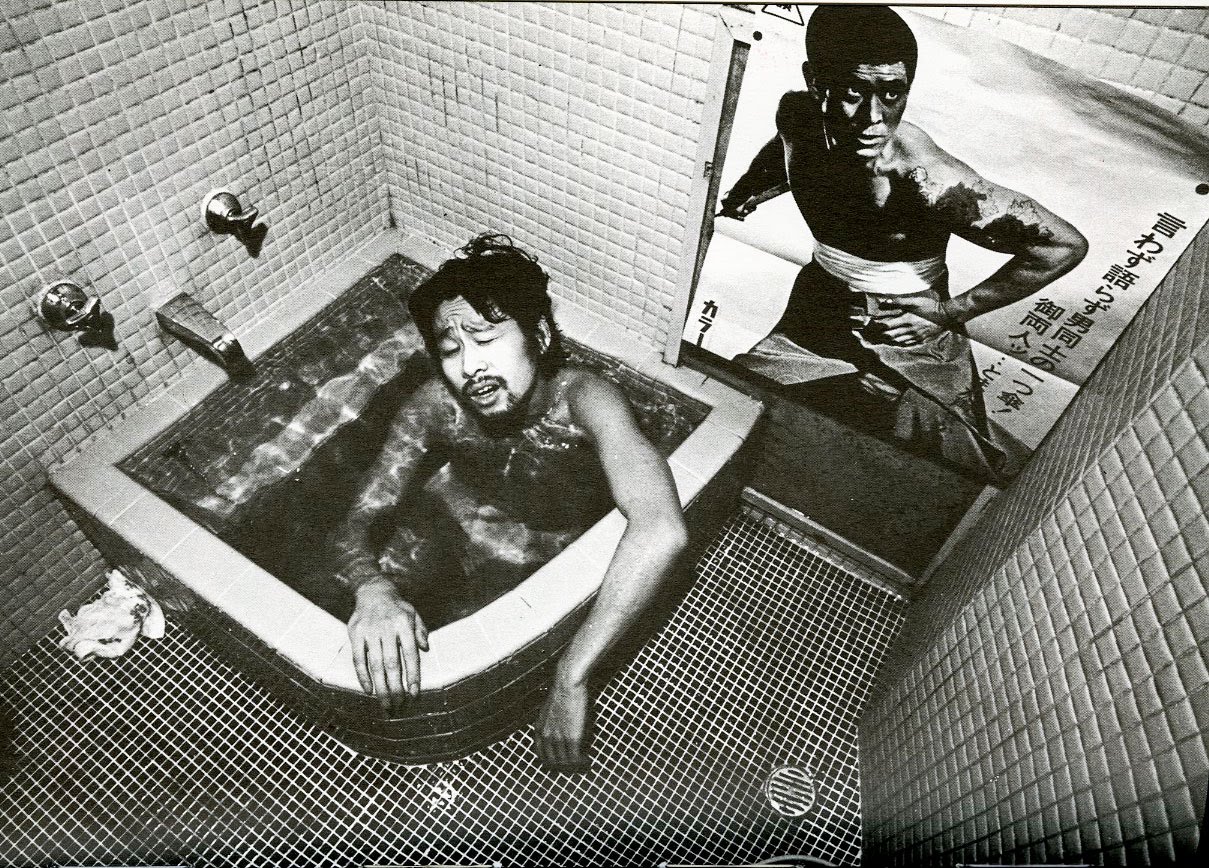
In the late 1960s he became interested in mysticism and psychedelia, deepened by travels in India. Because his work was so attuned to 1960s pop culture, he has often been (unfairly) described as the "Japanese Andy Warhol" or likened to psychedelic poster artist Peter Max, but Yokoo's complex and multi-layered imagery is intensely autobiographical and entirely original. By the late 60s he had already achieved international recognition for his work and was included in the 1968 "Word & Image" exhibition at the Museum of Modern Art in New York. Four years later MoMA mounted a solo exhibition of his graphic work organized by Mildred Constantine.[1]Shuji Terayama and his theater Tenjo Sajiki. He has also starred as a protagonist in Nagisa Oshima's film Diary of a Shinjuku Thief. Yokoo collaborated extensively with

In 1981 he unexpectedly "retired" from commercial work and took up painting. His career as a fine artist continues to this day with numerous exhibitions of his paintings every year, but alongside this he remains fully engaged and prolific as a graphic designer.

Found Here: http://en.wikipedia.org/wiki/Tadanori_Yokoo

Yokoo Tadanori began producing posters while attending high school in his hometown of Nishiwaki. Then, following stints at the Kobe Shimbun newspaper, the National Advertising Research Center, and after moving to Tokyo in 1960, the Nippon Design Center, Yokoo joined the Japan Advertising Artists Club at the tender age of 22.

In the mid-60s, through his relationships with Juro Kara and Shuji Terayama, Yokoo suddenly rose to prominence through works such as Koshi-maki Osen and La Marie Vison. At the same time, his illustrations for magazines such as Heibon Punch and Hanashi no Tokushu made him a darling of the media.

Yokoo's posters, which while reflecting post-war Japanese society, have been burned into our brains as unforgettable memories of the era. They are also notable for the fact that rather than following foreign trends, they display a unique sense of Japanese graphic design.

Yokoo's creative activities later expanding to include a wide range of fields such as painting and literature, but as he continued to produce posters throughout his career, the poster format functions as the core of his work as an artist.

In this exhibition, we present over 800 posters from the museum's collection along with invaluable documents from the artist's private collection in a full-scale introduction to Yokoo's overwhelming body of creative work that stretches over half a century.

Found Here: http://www.nmao.go.jp/english/b3_exhi_beginning_yokoo.html

(b Nishiwaki, Hyogo Prefect., 1936). Japanese stage designer, printmaker and painter. In 1960 he went to Tokyo and began his career as a stage designer. He was responsible for the design of such avant-garde drama as the Situation Theatre (Jokyo Gekijo) of Juro Kara (b 1940) and the Upper Gallery (Tenjo Sajiki) of Shuji Terayama (1935-83). He also produced prints and in 1967 exhibited works in the Word and Image exhibition at MOMA, New York. Although he used photographs as the basis of his designs, Yokoo's prints drew upon aspects of traditional Japanese woodcuts that coincided with the style of contemporary Pop art, using in particular flat areas of colour and overtly sexual subject-matter (e.g. X-sex IV, screenprint, 1968; priv. col., see Yokoo, 1990, p. 13). In addition to his activity as a commercial designer, from the late 1960s he became interested in mysticism and psychedelic art, influenced in particular by travels in India in the 1970s. He produced posters with eclectic imagery similar to that of contemporary psychedelic 'underground' magazines. In 1980 he unexpectedly took up painting, prompted by a large-scale travelling exhibition of Picasso's work that he saw in New York. He painted in an expressionistic figurative style works that appeared in stage productions for Yukio Mishima (1925-70) and in productions of operas by Richard Wagner.

Found Here: http://www.answers.com/topic/tadanori-yokoo

1936 Born in Hyogo Prefecture
1956 Nominated as member of Nissenbi(JAAC)Japan Advertising Artists Club
1960 Enters Nippon Design Center (NDC)
1964 Forms Studio "Ilfil"
1965 Participates in "Persona" exhibition (Matsuya Ginza)

Receives Mainichi Industrial Design Award
1966 Solo Exhibition (Nantenshi Gallery, Tokyo)
1968 Participates in "Word and Image" exhibition (MoMA, New York)
1969 Solo Exhibition (Tokyo Gallery)

Participates in "A Prospect of Modern Design in Japan" exhibition (The National Museum of Modern Art, Kyoto)

Awarded the Grand Prize for Prints at 6th Paris Youth Biennale

Participates in "18 Artists of Contemporary Prints" exhibition (Kyoto Municipal Museum of Art)

1970 Participates in Exhibition "Human Documents '70" (Tokyo Gallery)

Solo Exhibition (Matsuya Ginza, Kyoto, Kobe, Sapporo,Nagoya etc.)

Art-directs the Fiber Pavilion of Osaka Exposition
1971 "Chronicle of Art after World War II" Exhibition (Kanagawa Museum of Modern Art)

"The 10th Contemporary Art of Japan Exhibition" (Tokyo Metropolitan Art Museum, Kyoto Municipal Museum of Art)

"100 Artists in Art Today" (Hyogo Prefectural Museum of Modern Art)

1972 Solo Exhibition (MoMA, New York)

Receives the UNESCO Award of the 4th International Poster Biennale in Warsaw

Wins the Special prize in the 5th International Graphic design Biennale in Brno

Participates in "Print Art" Exhibition (Philadelphia Museum of Art)
1973 "Contemporary Art of Japan: A Panorama of Contemporary Japan Art in 20 years"(Tokyo Metropolitan Art Museum/Kyoto Municipal Museum of Art)

"Graphic Image '73" (Tokyo Central Museum / The National Museum of Modern Art, Kyoto)

Solo Exhibition (Museum fur Kunst und Gewerbe Hamburg)

Participates in Tour Exhibition in America "Contemporary Japan Prints"
(Museum of Fine Arts Boston/New York Culture Center)

Receives the Judge's Committee Prize of "Contemporary Japan Prints" (London ICA)

Wins the Grand Prize of Tokyo ADC
1974 Solo Exhibition (Stedelijk Museum, Amsterdam)

"The 11th Japan International Art Exhibition"(Tokyo Metropolitan Art Museum/Kyoto Municipal Museum of Art)

"Graphic design Image '74" (Tokyo Central Museum/The National Museum of Modern Art, Kyoto)

Receives the prize of Hyogo Prefectural Museum of Modern Art in the 9th International Print Art Biennale in Tokyo

Participates at the exhibition "Japan: Tradition and Contemporary" (Stadtmuseum, D us seldorf)

"Japanese Contemporary Prints" (Museo de Arte Moderno, Mexico)

Wins the Gold Prize of the 5th International Poster Biennale in Warsaw

Wins the Silver Prize of the 6th International Graphic Design Biennale in Brno
1975 Awarded the 20th Mainichi Design Award

"The 11th Contemporary Art in Japan Exhibition"(Tokyo Metropolitan Art Museum/Kyoto Municipal Museum of Art)

"Japanese Print Arts in 1975" Exhibition (Tochigi Prefectural Museum of Fine Arts)

"A Panorama of Contemporary Art in Japan" (Seibu Museum of Art, Tokyo)

"5 Japanese Graphic designers" (Musee cantonal des Beaux-Arts Lausanne/The National Museum of Contemporary Art, Oslo)
1976 Participates in Exhibition of "5 International Graphic Designers" at Venice Biennial
1977 "Contemporary Japanese Poster Exhibition" (Museu de Arte de Sao Paulo)

"The Past 10 years' Japanese Poster" (Stedelijk Museum Amsterdam)
1978 Wins the Merit Prize of The 7th International Poster Biennale in Warsaw

Awarded Kodansha Publishing Cultural Award for Binding
1979 Participates in '79 Art Festival in Tokyo (Tokyo Metropolitan Art Museum)

"Japanese Poster Exhibition" (Musee de la Publicite, Paris)

Wins 2000 Fmk Prize of the 3rd International Poster Biennial in Lahti
1980 Solo Exhibition (Okayama Art Museum)

Exhibits "Japan Style" (Victoria & Albert Museum, London)

"Japan-Poster" Exhibition (Museum of Modern Art, Vienna)
1981 Converted from a graphic designer to a painter

"World Contemporary Print in the 25 years"(Tokyo Metropolitan Art Museum / Tochigi Prefectural Museum of Fine Art/Hiroshima Prefectural Art Museum)

"A turning Point of Contemporary Art in 60's Japan"(The National Museum of Modern Art, Tokyo/The National Museum of Modern Art, Kyoto)
1982 Solo Exhibition (Museum fur Kunst und Gewerbe Hamburg)

Solo Exhibition (Nantenshi Gallery, Tokyo)
1983 Solo Exhibition ( Otani Memorial Art Museum,Nishinomiya city)

Solo Exhibition (Musee de la Publicite, Paris)

Participates in "A Tendency of Contemporary Art in Japan part 2: Departure to Diversity"(Tokyo Metropolitan Art Museum)
1984 Art-directs the stage decoration for Ballet "DIONYSOS", Belgique 20thCentury Ballet, produced by Maurice Bejart and Scara Theatre, MilanoSolo Exhibition (Otis Persons Gallery, Los Angeles)

"The 20th Century Posters: Avant-garde" at Walker Art Center, Minneapolis)

"The 2nd Toyama International Contemporary Art Exhibition" (The Museum of Modern Art, Toyama)

"A Panorama of Contemporary Art in Japan ム Graphic Art & Design"
(The Museum of Modern Art, Toyama)
1985 Invited works at The 13th Paris Biennale

Participates in The 18th Sao Paulo International Biennale

Solo Exhibition (Pallazzo Bianco, Genova)

Solo Exhibition (Farcone Theatre, Genova)

Solo Exhibition (Kunstlerhause Bethanien, Berlin)

"The 1st representational painting Biennale" (The Museum of Modern Art, Kanagawa)

"Contemporary Self-portrait" (The Museum of Modern Art, Saitama)

"Contemporary Art in 40 years" (Tokyo Metropolitan Art Museum)

"1985: Japanese Prints" (Tochigi Prefectural Museum of Fine Arts)
1986 Enters in "The 9th British International Print Biennale"

"Tokyo: Form and Spirit" (Walker Art Center, Minneapolis/The Museum of Contemporary Art, Los Angeles/IBM Gallery, New York/The San Francisco Museum of Modern Art)

"Japanese Avant-Garde 1910-1970" Exhibition (Centre Georges Pompidou, Paris)

"A Current of Contemporary Art in Japan: painting Part 1" (The Museum of Modern Art, Toyama)

Solo Exhibition (Roberta English Gallery, San Francisco)

Solo Exhibition (Israel Museum, Jerusalem)

Solo Exhibition (Roy Boyd Gallery, Los Angeles)

Exhibits "Art and Simplicity" (Setagaya Art Museum / Tochigi Prefectural Museum of Fine Art)
1987 Solo Exhibition (The Seibu Museum of Art, Tokyo)

Solo Exhibition (Carnegie Mellon University, Pittsburgh)

"Selection of the Frederick R. Weisman Foundation Collection of Art"(Pennsylvania, and several places in USA)

"Icons in Contemporary Art" (The Museum of Modern Art, Saitama)

Receives Hyogo Prefecture Cultural Award
1988 Solo Exhibition (Galerie Silvia Menzel, Berlin)

"The Modern Posters" (MoMA, New York)

Participates in "Art Kite" tour Japan, the U.S., and Europe in a traveling exhibition (The Miyagi Museum of Art)

"Human Image in Modern Art" (The National Museum of Modern Art, Tokyo)
1989 Receives Honorary Prize of The 4th ASIA Art Biennale, Bangladesh

"The 19th Contemporary Japan-Art" Exhibition (Tokyo Metropolitan Art Museum/Kyoto City Art Museum etc.)

"ARTIS '89 An international image for human and citizens' rights"(Centre Georges Pompidou, Paris)

"Contemporary Japanese Poster" Exhibition (MoMA, New York)
1990 Designs the plans of pavilion and garden for the Central American nation of Belize at Expo '90

The International Garden and Greenery Exposition held in Osaka

Participates in "Excellent Works in Modern Japanese Art: Zidai-wo-tsuranuku-bi" (Hyogo Prefectural Museum of Modern Art)

"Fantasy and Power: From Japanese Modern and Contemporary Art" (The Miyagi Museum of Art)
1991 Solo Exhibition (Sagacho Exhibit Space)

Exhibits in "Maniera-no-Kosaten: Contemporary Prints and Image Expression" (Machida City Museum of Graphic Arts)

"Beyond Japan: A Photo Theatre" (Barbican Art Gallery, London)

"Contemporary Japanese Graphic Design" (Design Museum, London)
1992 Exhibits in "Japan's Pop art 1960s" (Fukui Fine Arts Museum)

"Adam and Eve: 10th Anniversary Exhibition" (The Museum of Modern Art, Saitama)

"3 Japanese Poster Artists" (Tel Aviv Museum of Art)
1993 Participates in "45th Venice Biennale Trans-Actions" Venice, Italy

"International Poster Exhibition" (Tel Aviv Museum of Art)
1994 "Avant-garde Art in the Post War Japan"(Yokohama Museum of Art/ Guggenheim Museum SOHO, New York)

"Japanese Design" (Philadelphia Museum of Art)

"Art Today 1994" (Sezon Museum of Modern Art)

"The Pop Image Prints and Multiples" (Marlborough Gallery, New York)

Solo Exhibition (Contemporary Art Center, New Orleans)
1995 Receives the Mainichi Fine Art Award

Participates in "Sengo Bunka no Kiseki 1945-1995" (Japanese Culture:The Fifty Post-war Years)

(Meguro Museum of Art, Tokyo / Hiroshima City Museum of Contemporary Art / Hyogo Prefectural Museum of Modern Art / Fukuoka Prefectural Museum of Art)

The 1st Performance Poster International Triennial, Sophia (Bulgaria National Museum of Art)

Solo Exhibition (Tokyo Metropolitan Museum of Photography)

"Today's Art" (Louisiana Museum of Modern Art, Denmark)
1996 Solo Exhibition (Nantenshi Gallery, Tokyo)

"1960's Avant-garde Art in the Post War Japan" (Kurashiki City Art Museum)
1997 Solo Exhibition (Kirin Plaza, Osaka)

Solo Exhibition (Hyogo Prefectural Museum of Modern Art/ The Museum of Modern Art, Kanagawa)

Wins the Gold Prize of New York ADC Award

Publication. "The thing which cannot watch the thing which I see". A Chikuma library

Publication. "Return - Tadanori Yokoo Museum 1966-1997 to me." Hyogo Prefctural museum of art / Kanagawa prefectural Museum of Modern Art

Publication. "Asahi Museum - Tadanori Yokoo." Asahi Shimbun

Publication. "28 world graphic design - Tadanori Yokoo." King the graphic gallery

Publication. "Art of masterpiece response." I am pleased with a present of God. Kobunsha library

Publication. "I and intuition and an alien"(in the sky and the ground, similar figure - changes a title). Bunshun library

Publication. "Tokyo farewell look requiem." Asahi Shimbun

Publication. "A Yokoo's kissho-shofuku poster exhibition." (A fortune)Okanoyama Museum of art Nishiwaki
1998 Publication. "Tadanori Yokoo." In the days of a thing of red. (A fortune)Okanoyama Museum of art Nishiwaki

Publication. "A Yokoo's kissho-shofuku postcard book." Heibonsha Publishers Ltd.

Publication. "A collection of secret - Tadanori Yokoo talks to live now." Kobunsha library

Publication. "I lived in a flash in a friend". (Art is a love - change of the title). Kobunsha library

Publication. To "disturbance ! ". (Tadanori Yokoo autobiography - change of the title). Sentence spring library
1999

Exhibits in "Hyojo-han-hyojo: Prints in Japan 1945-1999" (Machida City Museum of Graphic Arts)


Solo Exhibition (Communications Museum, Tokyo)

"Ground Zero Japan" (Contemporary Art Gallery, Art Tower Mito)
2000 Solo Exhibition (Museum "Eki" Kyoto)

Elected to the Hall of the Hall of Fame, New York ADC
2001 Exhibits in "MoMA Highlights" (MoMA, New York)

"Century City ム Fine Arts and Culture of Contemporary City" (Tate Modern, London)

Solo Exhibition (The Museum of Modern Art, Toyama)

Solo Exhibition (Hara Museum of Contemporary Art, Tokyo)

Purple Ribbon Medal
2002 Professor for Postgraduate course of Tama Art University (March 2004)

Participates in "Pop! Pop!! Pop!!!" (The Museum of Modern Art, Ibaraki)

Solo Exhibition (Tokyo Metropolitan Museum of Contemporary Art / Hiroshima City Museum of Contemporary Art)

Awarded the ICOGRADA Special Prize of the 20th International Graphic Design Biennale in Brno
2003 Solo Exhibition (The National Museum of Modern Art, Kyoto)

Awarded the Slovakia Design Center Prize of the 5th 2003 Trnava Poster Exhibition (Slovakia)

Solo Exhibition (Fukuoka Art Museum)

Solo Exhibition (Entwistle Gallery, London)
2004 Directs the theatrical Arts and costume of public performance "King and Dragon : author Takeshi Umehara" in France

Wins the Silver prize of New York ADC

Exhibition "TAKARAZUKA: the Land of Dreams" (Suntory Museum, Tenpozan / Tokyo Opera City Art Gallery)

"Remaking modernism in Japan 1900-2000"(Museum of Contemporary Art,Tokyo / The University Art Museum-Tokyo National University of Fine Arts & Music)

Solo Exhibition (Miyazaki Prefectural Art Museum)

Solo Exhibition (SCAI the Bathhouse,Tokyo)

"Marcel Duchamp and the 20th Century Art" (The National Museum of Art,Osaka)

Received the Dark-blue Ribbon Medal from the Japanese Government

Directed the theatrical Art of "Takarazuka Dream Kingdam" by Takarazuka girls' operetta company

Produced the Rapping design for Electric Trains of JR Kakogawa-line

Received the International Jury Prize of The 3rd International Poster Biennial,Ningbo 2004 (China)
2005 Solo Exhibition (Contemporary Art Museum, Kumamoto)

Solo Exhibition (Ikeda Museum of 20th Century Art)

Solo Exhibition (Nantenshi Gallery, Tokyo)

Wins the Grand Prize of the 15th International Poster Biennial in Lahti

ISSEY MIYAKE PARIS COLLECTIONS 1977-1999: Invitations by Tadanori "Yokoo" (The Museum of Modern Art, Toyama)


The Last Exhibition of Parallelism in Art (Espace OHARA)
2006 Solo Exhibition (Fondation Cartier pour I' art contemporain ,Paris )

New Acquisition Contemporary Art and The Humor(Hiroshima City Museum of Contemporary Art)

"Dream, Rousseau whom Rousseau watched dream to watch" (Setagaya art museum)

Winning Japanese culture design grand prix
2007 "art / nonart / nonart 1950-1970" exhibition(J.Paulgetty Museum, Los Angeles)

War and an art exhibition(Kyoto formative arts University gallery Aube)

Art / nonart / nonart: Experiment in the public area in postwar Japan, 1950-1970(J.Paulgetty Museum, Los Angeles)

SEPTEMBER SHOW 2007(A Nishimura art gallery)

Imagery Play(PKM gallery Beijing)

MOT collection pop way 1960s - 2000s(Tokyo Museum of Contemporary Art)

Hyogo, person who has rendered distinguished services commendation.
Setagaya-ku, special culture service commendation.
2008 8 Solo exhibitions(Scai the bathhouse)

Solo exhibition(A Nishimura art gallery)

War and art. Fear and a vision of the beauty(Kyoto formative arts University gallery Aube)

An image of a human being exhibition of the 20th century.

A Tokushima prefectural Museum of Modern Art possession perfect gem exhibition(Gunma prefectural Tatebayashi art museum)

Japanese art: It is collected Hyogo from modern times to the present age(Oscar Niemmyer Museum)

The masked portrait(Marianne Boesky Gallery, N.Y.)

Asia and a European portrait exhibition(The National Museum of Art)

"Wonderland." A Japanese contemporary art exhibition(Opera gallery Hong-Kong)

An image to rebel against. The print media after the nonart and art. 1960 '-70'(Urawa Museum)

I publish novel "BURULAND" carried by literary arts magazine "Bungeishunju Ltd.".

Solo exhibition(Setagaya art museum)

Solo exhibition(Hyogo Tatsumi art building)

Solo exhibition(FRIEDMAN BENDA GALLERY)

Winning Kyoka Izumi literary

Found Here: http://www.tadanoriyokoo.com/prof/index.html